



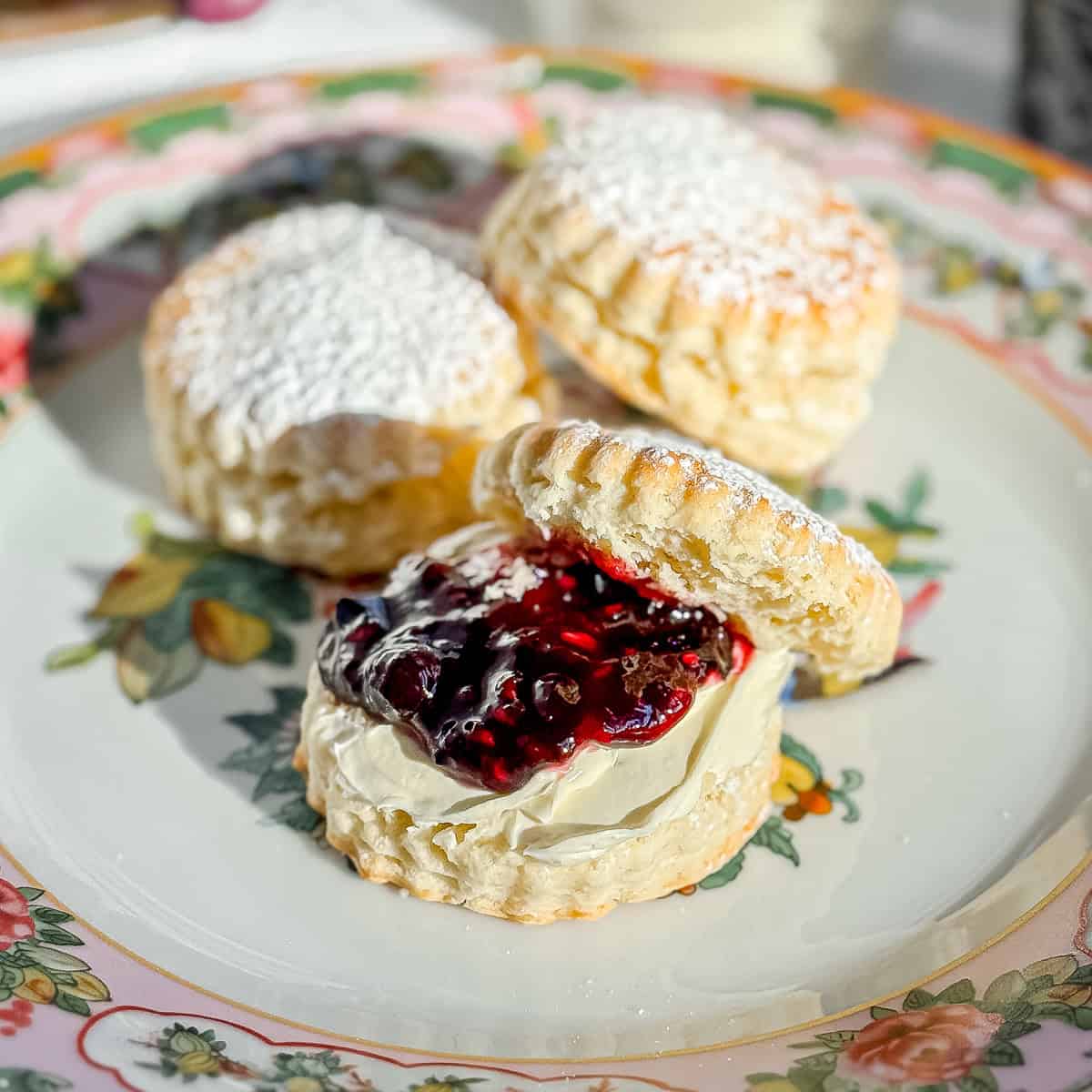
These Traditional British Cream Scones are soft, tender, and lightly buttery with a rich texture and just the right amount of sweetness. Made with simple pantry ingredients and ready in about 30 minutes, they are perfect for brunch, afternoon tea, or a cozy weekend breakfast.
Save this recipe for later
Enter your email and I'll send this recipe straight to your inbox.
These Traditional English Tea Scones are everything a classic English scone should be. Tender, lightly sweet, and golden on top, they are perfect for splitting open and topping with butter, jam, or clotted cream.
I first fell in love with them years ago when I took my daughters to the St. Regis in New York for high tea in their Astor Court Tea Room. Warm scones arrived at the table with jam and clotted cream, and it was such a special little moment. Sadly they no longer serve high tea there, so recreating these traditional British cream scones at home became my way of bringing that memory back to life.
Jump to:
British scones versus American scones
There has always been a lot of vigorous discourse in my comments and DM's about whether something is a real scone or even if my biscuit recipes are actually scone recipes, so let's discuss.
What are British scones? British cream scones are small, lightly sweet pastries that are traditionally served with jam and clotted cream and eaten with afternoon tea. Unlike big American scones, which are often wedge shaped and filled with fruit or topped with glazes, classic British scones are simple and tender so they can be split open and dressed with toppings. They are usually round, lightly golden on top, and soft inside.
We good? Good.
If you like these British scones, try my take on Irish soda bread in my Irish soda bread muffins. Kind of a cross between a scone and a muffin, they are a delight!
Ingredients & Substitutions
The ingredients for British cream scones are simple, and not much different than American scones or biscuits, but there are small differences that make them unique. Let's check out the major players and how you can make changes and still bake a good scone:

- All-purpose flour - Common all-purpose flour works fine for making scones, but see the note below for flours that can make your scones even more authentic in taste and texture.
- Baking powder - Baking powder is what makes your scones rise in the oven, but if you have self rising flour from making my two ingredient biscuits or simple flatbread, you can use that and omit the baking powder and the salt from the recipe.
- Kosher salt - Kosher salt tends to taste less "salty" than common table salt. If that is all that you have, use half the amount listed in the recipe.
- Heavy cream - You can use either heavy cream or heavy whipping cream, double cream in the UK. Light cream and half and half have much less fat and will result in a more dense scone with less flavor.
- Egg - Scones made with an egg taste richer, hold together better, and are less crumbly, all good things!
- Cold unsalted butter - British scones usually contain less butter than say, an American orange scone or a buttermilk biscuit, with the cream contributing additional fat. I always use unsalted butter. If you only have salted butter, cut your salt in half or eliminate it altogether if using table salt in the recipe.
- Sugar - I add a small amount of sugar to these fluffy scones, which not only makes them sweeter, but contributes to their tenderness and helps with browning. You can reduce the amount to only one tablespoon if you prefer a less sweet scone, or if amaking savory scones on accident.
- Other sugars (not shown) - Some people like to top their scones with turbinado sugar or demerara sugar before baking, but that's something I find more common in American scones. If anything, British scones are dusted with a bit of powdered (icing sugar) after baking.
See recipe card below for a full list of ingredients and measurements.
Best flour for the best scones
The flour sold in England, called plain flour, is finer and has a lower protein count, making for a more tender and fluffy scone interior. American all-purpose flour works fine, but if you can find White Lily flour in stores or online (it's most common in the Southern U.S.), it also has a fine texture and low protein.
If you can't find White Lily flour or British plain flour, but still want to replicate the soft texture of traditional scones, you can either use cake flour or you can replace 2 tablespoons of all-purpose flour with 2 tablespoons of cornstarch and sift it well to mix.

Want to try another British classic? Try Quick Breakfast Toad in a Hole.
Variations
Although I kept these classic scones are simple, to honor the traditional style, there are a few popular variations of the classic British cream scone. Some common variations include:
- Currant or Sultana Scones: A small handful mix-ins like dried currants or sultanas (golden raisins) can be folded into the dough for a traditional twist. I don't enjoy raisins of any kind, and probably won't be indulging in this, but feel free.
- Lemon or Orange Zest: A touch of lemon zest or orange zest added to the scone dough is a common addition, giving a refreshing, bright flavor without overwhelming the simplicity of the scone.
- Chocolate chips - I personally don't love chocolate chips in scones, but my husband does, so sometimes I'll do a half batch just for him. I'm very nice.
- Cheese Scones: For a savory twist, grated cheddar cheese or other sharp cheeses can be added to the dough. These are often paired with butter or served alongside soups.
Cynthia's Recipe Review
I love how simple and classic these cream scones are. Warm from the oven with some of my homemade strawberry jam and clotted cream, they feel like they came straight from the kitchens at the Astor Court tea room.

Instructions
This cream scones recipe is even easier to make than most of my traditional biscuit recipes, meaning you have no excuse for not treating yourself to a fancy little scone once in a while. Line a large baking pan with parchment paper and let's get started.

Step 1: Combine flour, baking powder, kosher salt, and sugar in a large bowl. Whisk or sift dry ingredients to remove any lumps.

Step 2: Using your fingertips, a pastry cutter, or a fork, cut cold butter into the flour until it has the texture of coarse meal with small pieces of butter, none larger than a pea present. This can also be done in a food processor.

Step 3: Any add-ins can be folded in now. Then, whisk together an egg with cold heavy cream and add to the flour mixture.

Step 4: Gently stir together with a silicone spatula just until most of the dry components have been incorporated into the dough. Do not overmix. There may be some dry pockets of flour at the bottom of the bowl.

Step 5: Dump the loose shaggy dough onto a lightly floured surface, placing any dry bits in the middle.

Step 6: Use your hands to gather the dough together, kneading as little as possible. We are not trying for flaky layers, so folding or stacking is unnecessary.

Step 7: Pat or roll out to about ½ to ⅔ inch thickness. Use a 2 to 2½ inch Fluted cutter, biscuit cutter, or cookie cutter, to cut out scone rounds. Press any scraps together and cut out more scones. Place scones on prepared baking sheet in the freezer while you preheat your oven to 425°F.

Step 8: When the oven reaches temperature, remove the scones from the freezer and brush with a little bit of extra cream or with an egg wash consisting of an egg whisked with 1 tablespoon of water.

Bake: Bake for 12 to 15 minutes, or until golden brown on top. Let cool on the pan for at least 10 minutes. Dust with a sprinkling of powdered sugar if you like.
Feeling fancy? Try my Sparkling Cranberry Mocktail. Scented with rosemary simple syrup, and using cranberry sauce or preserves for a sweet and tart sip, this one isn't just for the Holidays, it's for all the days!

Expert tips
- Keep ingredients cold: Start with cold butter and cream to ensure the dough stays light and fluffy. Placing your cut scone rounds into the freezer or refrigerator while the oven preheats will firm the butter back up.
- Be gentle: Mix the dough just until the ingredients come together and gently pat or roll out. Overworking the dough can make the scones tough instead of tender.
- Cut cleanly: Use a sharp biscuit cutter or knife and press straight down without twisting. Twisting can seal the edges and keep your scones from rising properly. If you don't have a biscuit cutter, you can cut them into squares with a sharp knife.
- Brush with cream or egg wash: Before baking, brush the tops of the scones with cream or a beaten egg to give your scones a beautiful golden finish.

Recipe FAQs
For the best texture and flavor, heavy cream is preferred. However, you can substitute it with half-and-half or milk in a pinch, though your scones might be slightly less rich.
Traditional accompaniments include clotted cream and jam (strawberry and blueberry jam are my favorites). You can also serve them with butter, honey, or even my easy lemon curd.
Yes! You can prepare the dough, cut out the scones, and freeze them unbaked. When you're ready to bake, pop them in the oven straight from the freezer, adding a minute or two to the baking time.
Place fully cooled scones in an airtight container or wrap them tightly in plastic wrap. They'll stay fresh at room temperature for up to 2 days. Warm them in a 350°F oven for 5 to 10 minutes to restore their soft texture and crisp edges.



Did you try this recipe?
Please consider leaving a comment with a ⭐️ rating below and tell me all about it! It helps me to continue to improve my content and lets others know what you think!
I appreciate it so much!
-Cynthia
📖 Recipe

Traditional British Cream Scones (Classic English Tea Scones)
Recommended Equipment
- Fluted cutter or ⤵️
Ingredients
- 2 cups (240 g) all-purpose flour
- 6 tablespoons (84 g) unsalted butter cold and cubed
- 2 teaspoons (8 g) baking powder
- ½ teaspoon kosher salt
- 3 tablespoons (36 g) granulated sugar or caster sugar
- 1 egg whisked
- ½ cup (120 g) heavy cream cold
Instructions
- Combine flour, baking powder, kosher salt, and sugar in a large bowl. Whisk or sift to remove any lumps.
- Use a finger snapping motion, or a pastry blender, to cut cold butter cubes into the flour until it has a fairly uniform texture with no large butter pieces present. This can also be done in a food processor.
- Whisk together an egg with cold heavy cream and add to the flour and butter mixture.
- Gently stir together just until most of the dry components have been incorporated into the dough. Do not overmix. There may be some dry pockets of flour at the bottom.
- Dump the contents of the bowl, with any dry bits in the middle, onto a lightly floured counter.
- Use your hands to gather the dough together, kneading as little as possible. Pat or roll out to about ½ to ⅔ inch thickness.
- Use a 2 to 2½ inch fluted cutter, biscuit cutter, or cookie cutter, to cut out scone rounds. Press any scraps together and cut out more scones.
- Place them on a parchment paper lined baking sheet in the freezer while you preheat your oven to 425°F.
- When the oven reaches temperature, remove the scones from the freezer and brush with a little bit of extra cream or with an egg wash consisting of an egg whisked with 1 tablespoon of water.
- Bake: Bake for 12 to 15 minutes, or until golden brown on top. Let cool on the pan for at least 10 minutes. Dust with a little powdered sugar if you like.


British scones never, ever have cream in the mixture! If cream is used it would be used as a topping when the scone is cut into two layers
Oh my goodness! I suppose you'll have to take that up with the British pastry chef with whom I trained and with Paul Hollywood who also made some amazing British CREAM scones in a classic YouTube video. I'm sure they'd like to have a word.
This is a recipe I make regularly! My family loves it and it's so fast, if I am baking I typically just add on this recipe because we can always use more scones. I also lived in Ireland for awhile and this reminds me of the scones I ate there!