

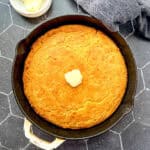
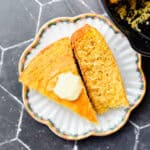
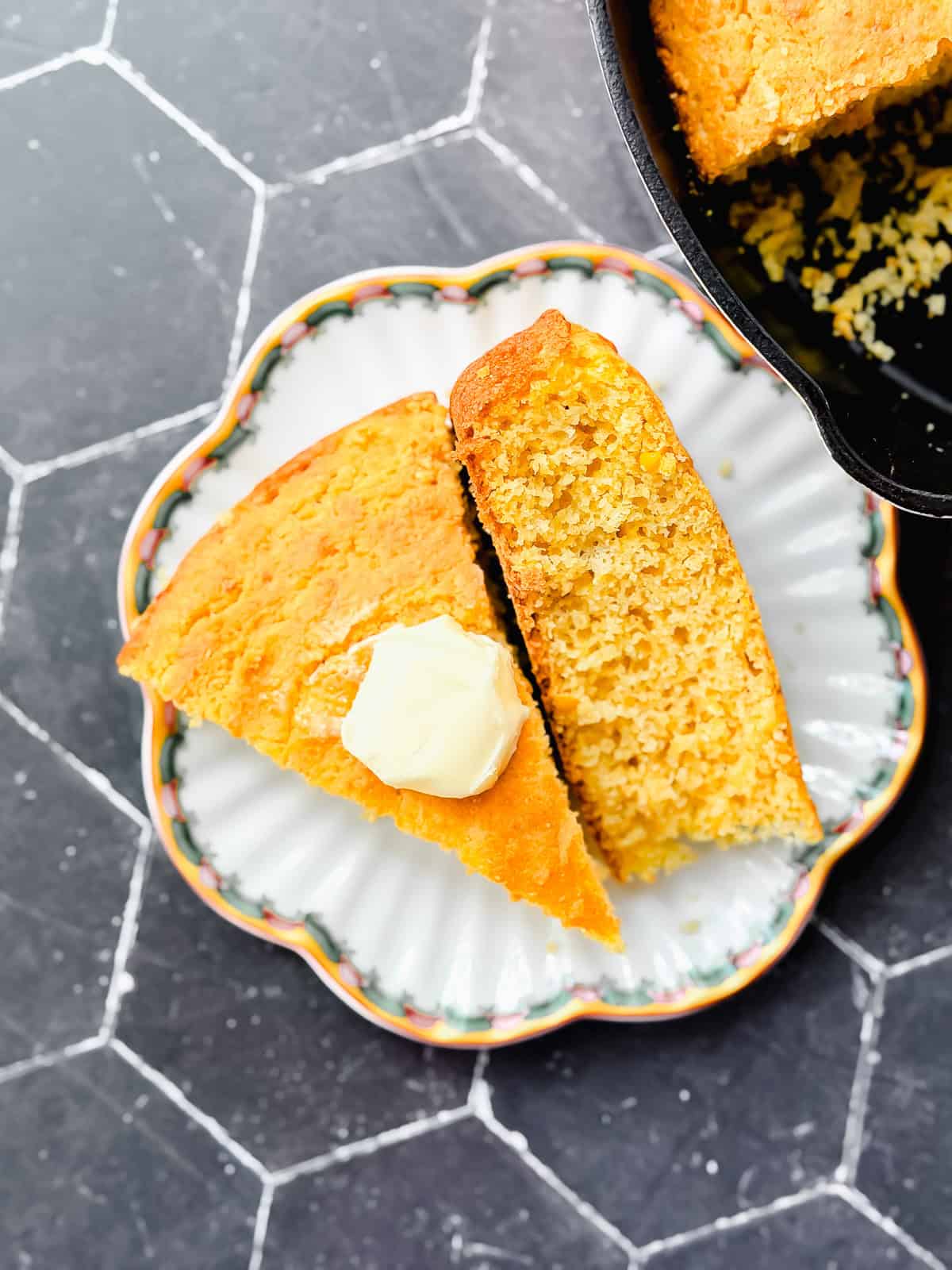
My Grandma's Skillet Cornbread with Cream Corn comes together in about 35 minutes, start to finish, using a handful of pantry staples and one very important technique: a screaming hot cast iron skillet. That sizzle when the batter hits the pan? That is the sound of a crispy, golden crust forming in real time and really, really good cornbread coming to your table.
Save this recipe for later
Enter your email and I'll send this recipe straight to your inbox.
This Skillet Cornbread Recipe is my version of my Grandma Olga Mae's cornbread, which she made in a cast iron skillet her whole life. Because she was a thrifty war widow who knew how to stretch ingredients without sacrificing flavor, she used a full can of creamed corn and skipped the buttermilk entirely. It always worked, but I love everything that buttermilk brings to the table, so I added it back in and pulled the creamed corn back just a little to balance things out. Her version. My version. Both are worth making.
She also kept a coffee can of bacon fat on the counter, which I still think about every time I open my refrigerator and pull out my very civilized, food-safety-approved jar of the same thing. If you have bacon fat, use it here. If you don't, melted butter is just fine. Either way, what you need to do is make this cornbread.
For a little more Southern comfort on the table, my buttermilk biscuits and sausage gravy would not be mad about sitting right next to a warm wedge of this cornbread. Yes. Two carbs. We're Southern.
Jump to:
In This Post You Will Learn
- Why preheating the cast iron skillet is non-negotiable for crispy edges
- How creamed corn adds moisture and flavor without making the cornbread dense
- What bacon fat does for cornbread and what to use instead
- How to know when your cornbread is done
- Storage and reheating tips to keep leftovers tasting fresh
Why you'll love this recipe
- Crispy Edges - A preheated buttered skillet gives you that golden, crunchy crust on the bottom and sides.
- Moist Center - Creamed corn keeps every slice tender without making it heavy or cakey.
- Big Corn Flavor - Real corn flavor from the creamed corn, not just cornmeal.
- Simple Ingredients - Everything comes from your pantry and refrigerator. No special grocery run required.
- Fast - About 10 minutes of mixing and 25 to 30 minutes in the oven.
Jiffy Mix can take a seat. This is the best cornbread you will ever put on your table.
Ingredients & Substitutions
Below is a photo of everything you need to make this creamed corn cornbread. Let's go over the ones worth talking about and where you can make changes.
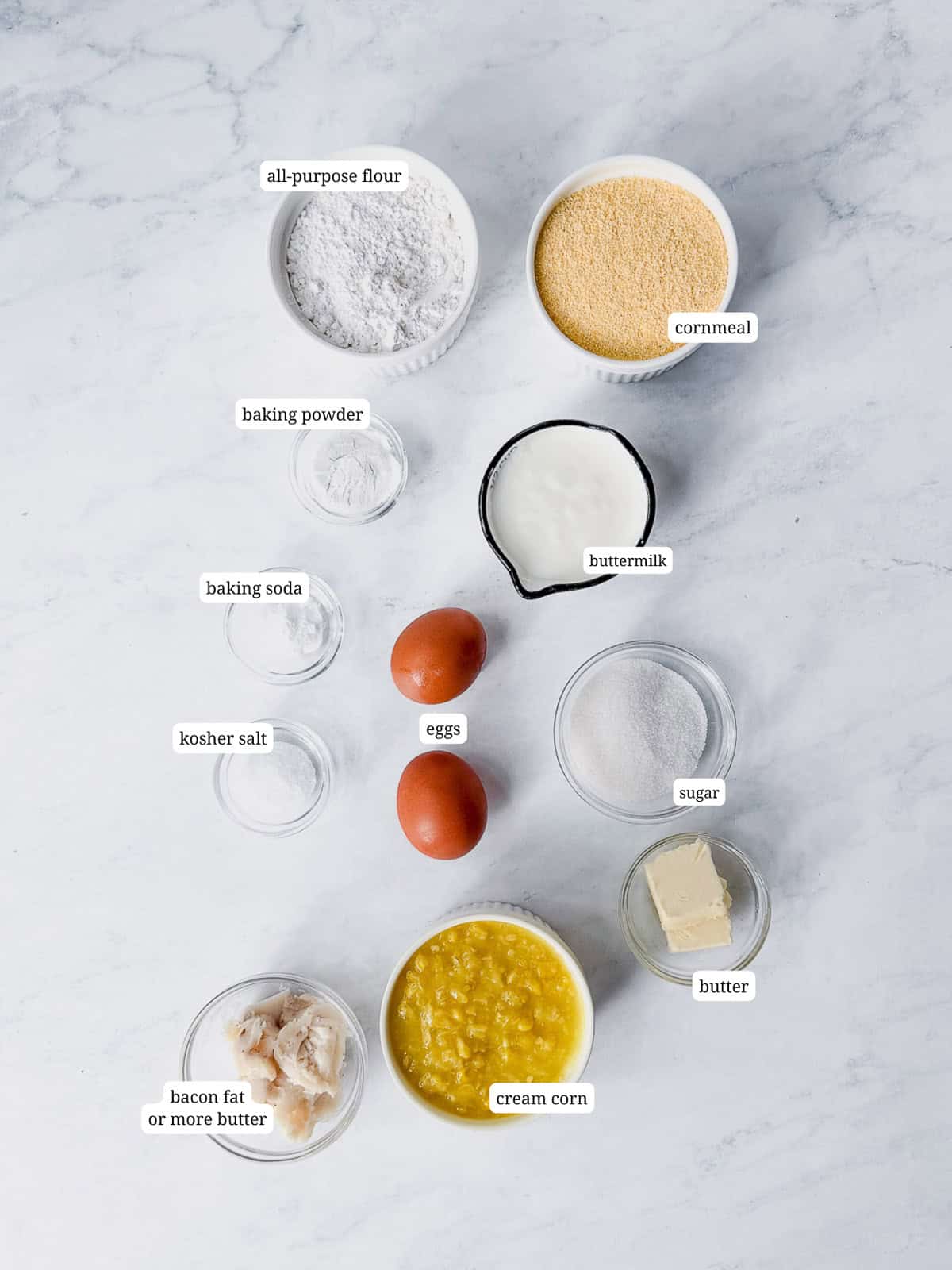
- Creamed corn - Use canned creamed corn, sometimes labeled cream-style corn. It adds moisture, sweetness, and more corn flavor without making the cornbread overly dense. Do not swap this for whole kernel corn or you will lose the moisture it contributes to the batter. If you don't want to use creamed corn, leave it out and increase your buttermilk to 1 ½ cup.
- Bacon fat - This is Grandma Olga Mae's move, and I am here for it. Bacon fat gives the cornbread a slightly smoky, savory depth that is hard to explain and easy to love. Melted butter works just as well if you do not have it or prefer not to use it. Melted lard, shortening, or a neutral vegetable oil will also do the job.
- Buttermilk - Buttermilk brings tenderness to the inside of your cornbread and a gentle tang that balances the sweetness of the corn. If you do not have it, plain yogurt thinned with a tablespoon or two of milk works well. Skip the lemon juice and vinegar substitute here, it just does not behave the same way in a batter like this.
- Sugar - Olga Mae just used plain granulated sugar, but if you want, you can warm up a little bit of honey and whisk it into your room temperature buttermilk and eggs.
- Butter for the skillet - This goes into the hot pan right before you pour in the batter. It coats the bottom and sides, flavors the crust, and creates that sizzle moment that tells you everything is going exactly the way it's supposed to.
See recipe card below for a full list of ingredients and measurements.
Yellow or white cornmeal?
Either will work, but I am going to tell you to reach for the yellow every single time. Yellow cornmeal just tastes more like corn. Deeper, a little sweeter, with that flavor that makes you close your eyes for a second when you take a bite.
White cornmeal is perfectly fine, but it brings a milder, more laid-back flavor to the party. And listen, there are plenty of recipes where mild and laid-back is exactly right. This is not one of them. This is cornbread. We are here for corn flavor, and yellow cornmeal shows up and delivers every time.
Variations
Once you have made this once, you are going to start thinking about what else you can do with it. Here are a few directions worth trying:
- Jalapeño Cheddar - Fold in one diced jalapeño (seeds removed if you are being cautious, seeds in if you are bold) and a cup of shredded sharp cheddar. Bold behavior from a humble cornbread.
- Honey Butter Finish - Instead of plain butter brushed on top, mix softened butter with a drizzle of honey and spread it over the hot cornbread as soon as it comes out of the oven. Completely unnecessary. Highly delicious.
- Extra Savory - Add crumbled cooked bacon, diced green onions, or fresh corn kernels to the batter for more texture and more of everything good.
- Sweeter Southern Style - Increase the sugar to a third of a cup if you lean toward a sweeter cornbread. Some folks do, some folks don't. You do you.
- Thinner Cornbread - Pour the batter into a 9 x 13-inch pan or quarter sheet pan and start checking for doneness around 18 to 20 minutes. Great for feeding a crowd.
Cynthia's Recipe Review
This cornbread is everything. That crispy bottom crust, the tender center, the butter melting into the top while it is still hot from the oven. My Grandma Olga Mae would take one look at this and just tuck in. That's all the praise I ever needed ❤️

Equipment
A 10 inch cast iron skillet is the star of the show here. It holds heat evenly and creates that impossibly crisp crust that a glass or ceramic baking dish simply cannot replicate. If you do not have a cast iron skillet, a square metal baking pan or cake pan will work, but just know the edges will not be quite as dramatic.
Beyond that, all you need is a large mixing bowl, a glass measuring cup or smaller bowl for your wet ingredients, a whisk, and a silicone spatula. My Italian frittata showed me that the cast iron skillet is one of those kitchen tools that just makes everything better, and this cornbread is more proof of that.
Step-by-Step Instructions
This is a one-bowl, one-measuring cup situation, and if you use a kitchen scale, nothing else. That means minimal cleanup and maximum reward. Read all the way through before you start, and then follow along with the steps below.
Step 1: Preheat the oven to 425°F. Place the empty 10-inch cast iron skillet on the middle rack while the oven heats up. This is not optional.
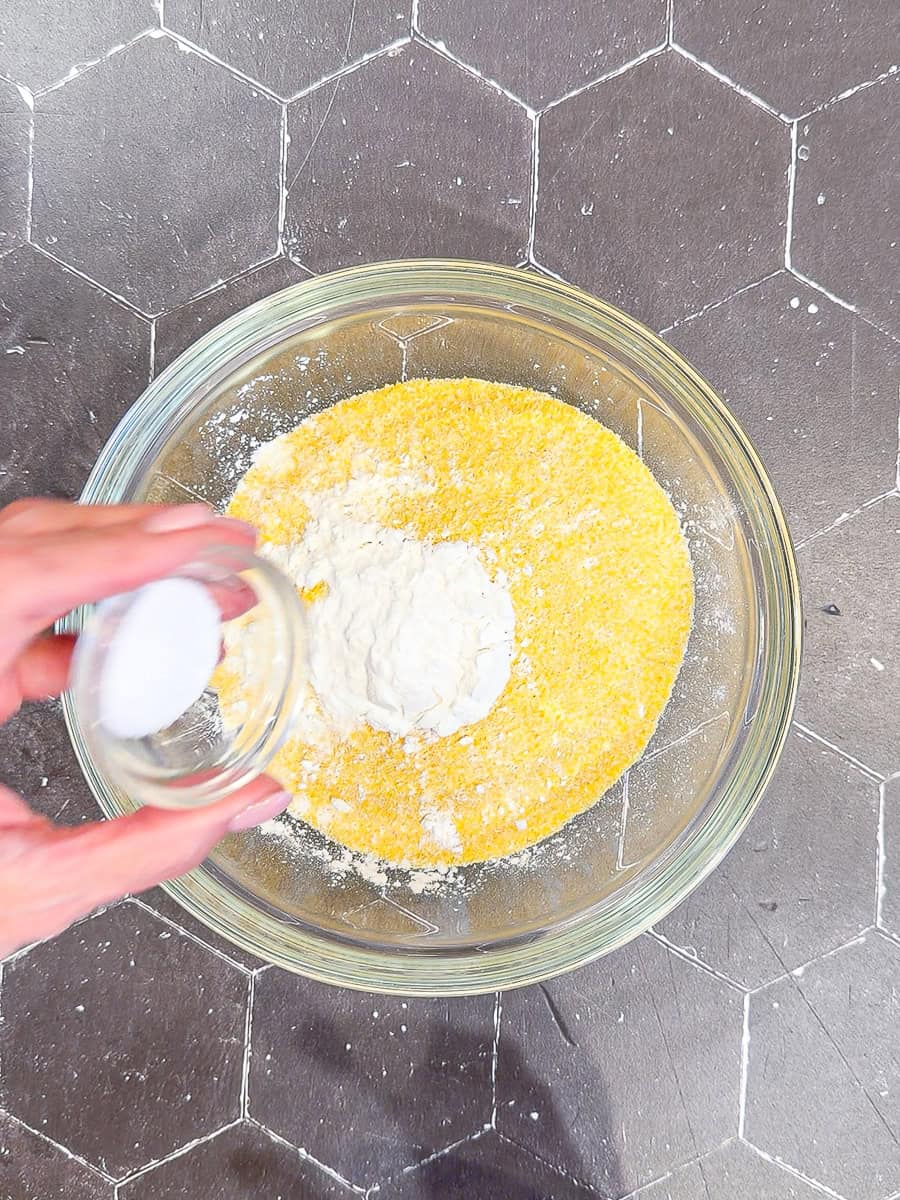
Step 2: In a large mixing bowl, whisk together the cornmeal, all-purpose flour, baking powder, baking soda, and salt.
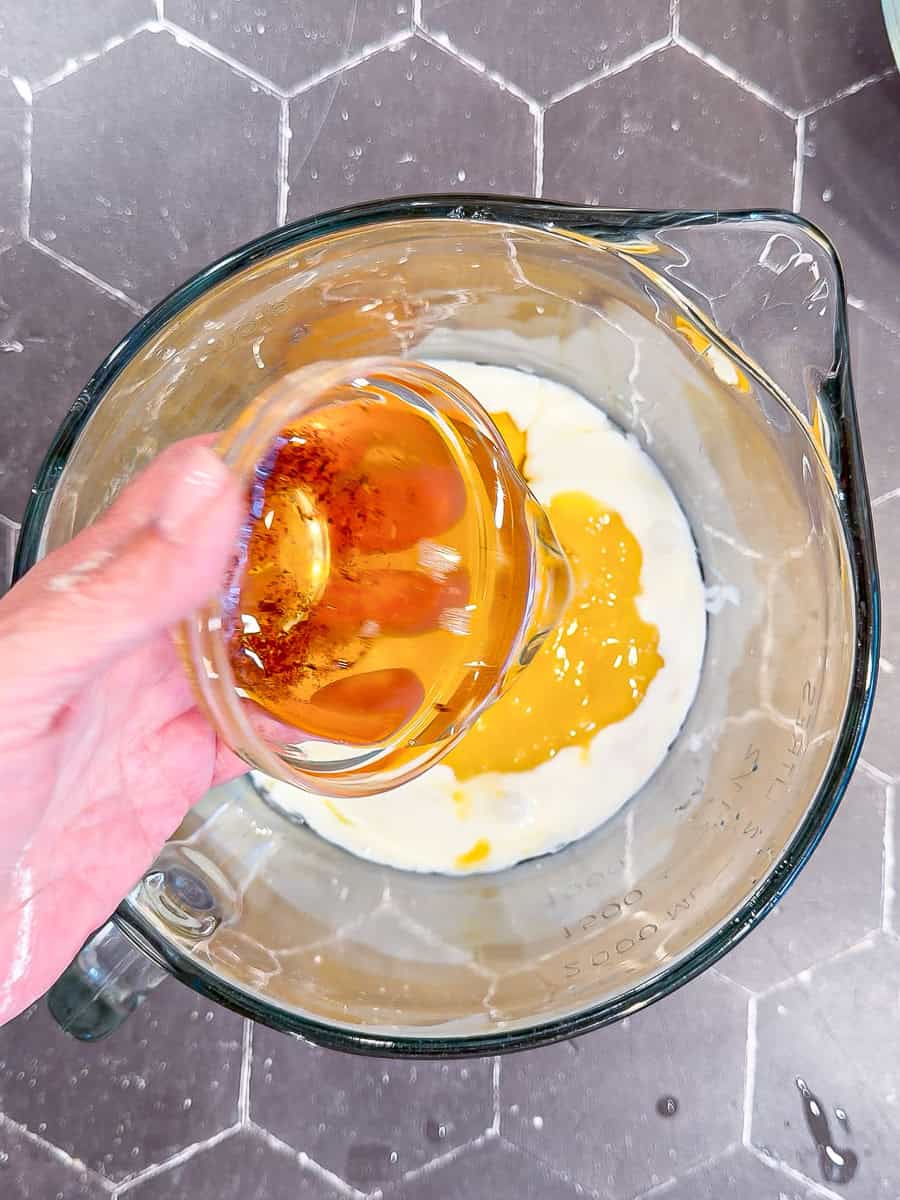
Step 3: In a large glass measuring cup or medium bowl, whisk together the buttermilk, eggs, sugar, creamed corn, and melted bacon fat or butter until well combined.
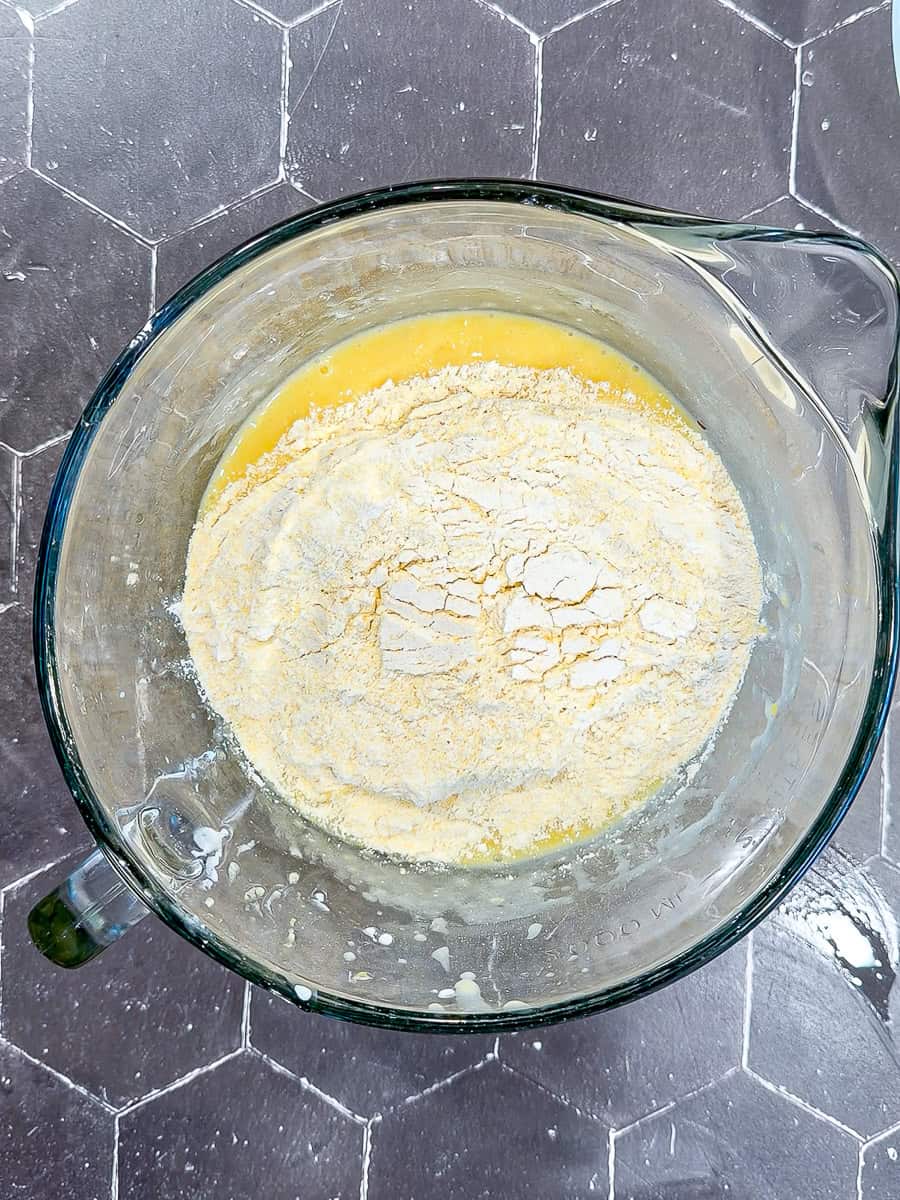
Step 4: Pour the wet ingredients into the dry ingredients and stir with a silicone spatula just until combined. Do not overmix. Carefully remove the hot skillet from the oven. Add the 2 tablespoons of butter and swirl the pan so it coats the bottom and sides as it melts.
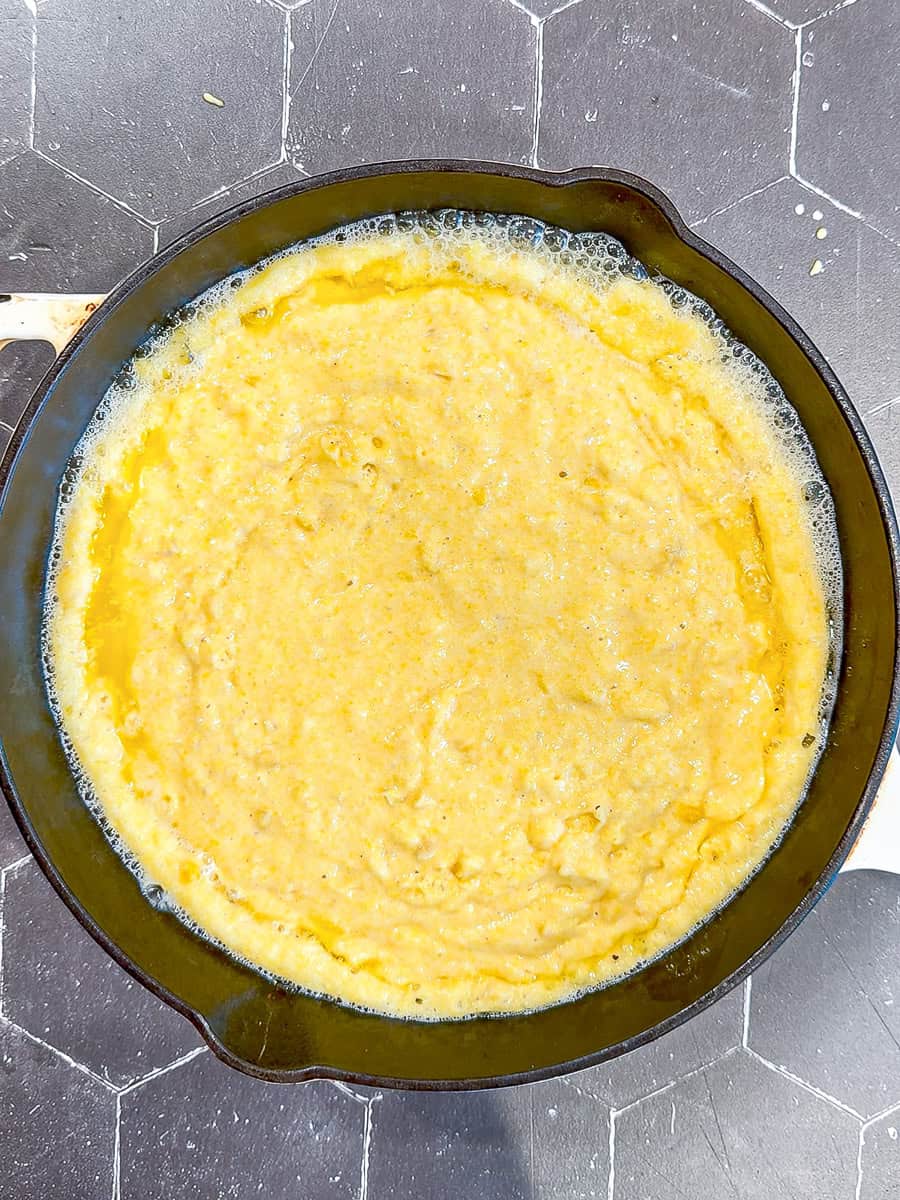
Step 5: Immediately pour the cornbread batter into the hot skillet. The edges should sizzle as soon as the batter hits the pan. Some of the melted butter may pool around the edges or float to the top. That is exactly what you want.
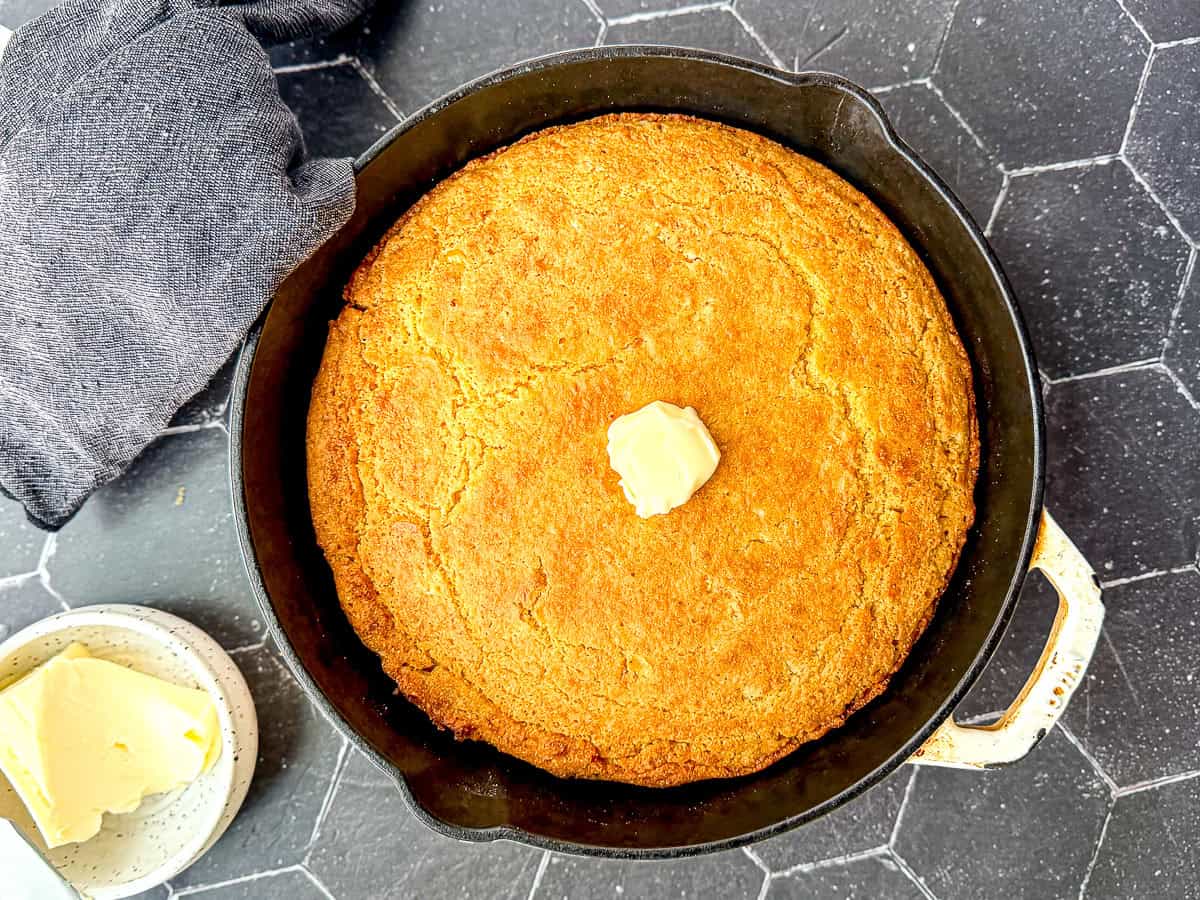
Bake: Return the skillet to the oven and bake for 25 to 30 minutes, or until the top is deeply golden brown and a toothpick inserted into the center comes out clean or with just a few moist crumbs.
Finish: Remove the skillet from the oven and rub a little butter over the top while it is still hot. Let the cornbread cool in the skillet for 5 to 10 minutes before slicing. I know. It smells incredible. But please wait just a little.
Cynthia's Helpful Tips
- Preheat the skillet - Do not skip this step. A cold skillet goes into a hot oven and gives you a soft bottom. A hot skillet gives you a crispy, golden crust. These are very different outcomes.
- Do not overmix - Stir just until the wet and dry ingredients come together. Overmixed cornbread batter turns out tough and dense, and nobody asked for that.
- Room temperature ingredients - Cold eggs and cold buttermilk can cause the melted fat in the batter to seize up. Pull them out of the refrigerator about 30 minutes before you start.
- Move fast with the batter - Once the butter goes into the hot skillet, pour your batter in immediately. You want that sizzle contact right away to build the crust.
- Brush with butter while hot - The warm cornbread soaks it right in. Don't wait until it cools.
Troubleshooting Your Cornbread
- Cornbread is pale on the bottom: The skillet probably was not hot enough when the batter went in. Make sure your oven is fully preheated and the pan has been in there for the full preheat time.
- Center is underdone: Every oven is different. If your toothpick comes out wet, give it another 3 to 5 minutes and check again. The top will look done before the center is.
- Cornbread stuck to the skillet: This usually means the pan was not well coated with butter before the batter went in, or the butter burned off before the batter was added. Swirl quickly and pour fast next time.
- Texture is too dense: Check that your baking powder is fresh. Old leavener is a sneaky culprit. Also make sure you did not overmix the batter.
- Too dry: This can happen if you baked it a few minutes too long or if your skillet runs hot. Check for doneness at the 25 minute mark next time and pull it as soon as the toothpick comes out clean.
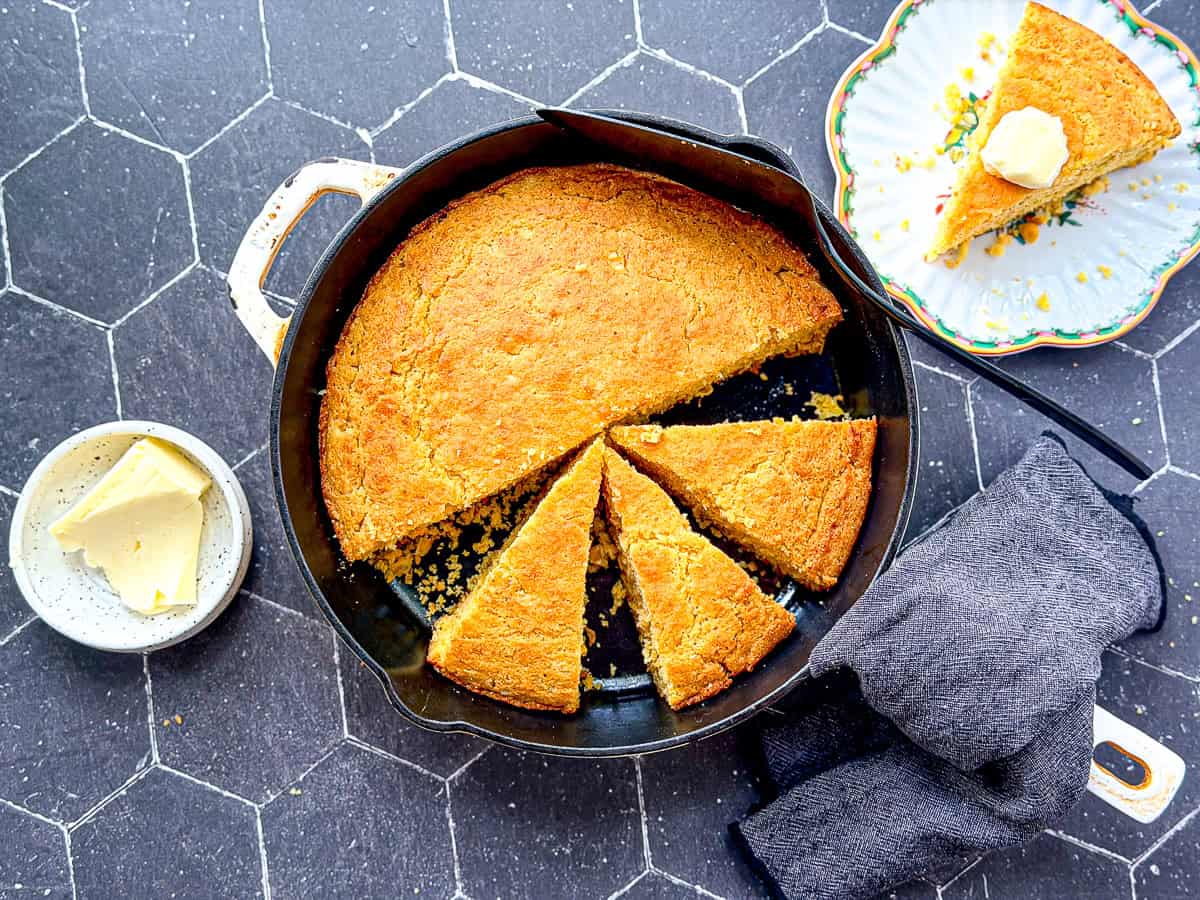
Serving Suggestions
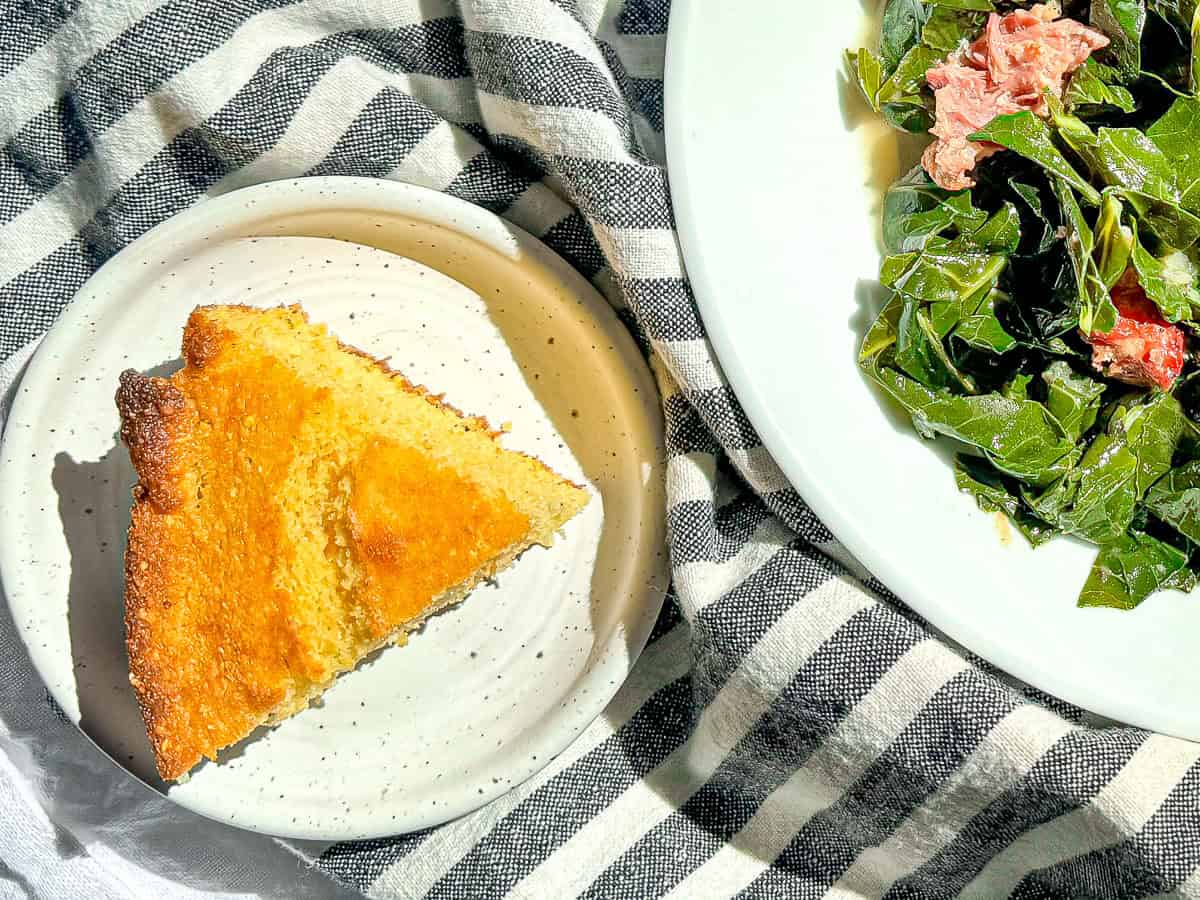
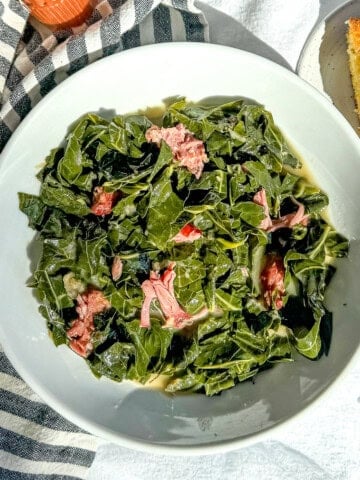
I know chili with cornbread is the classic move, but this cornbread is also deeply at home next to a big pot of southern collard greens or a bowl of something hearty and brothy like my black eyed peas. And my Grandma Olga Mae thought it was best crumbled into a cold glass of buttermilk. You either know, or you don't. I don't but respect your choices.
Recipe FAQs
Yes. A square metal baking pan or a round cake pan will work. The bottom crust won't be as crisp, but the cornbread will still be tender and delicious. Glass or ceramic baking dishes are not recommended because they do not conduct heat the same way and the exterior of your cornbread will have a different texture.
For this specific recipe, yes. The creamed corn is doing real work here, adding moisture, sweetness, and corn flavor. Swapping it for whole kernel corn would change the texture of the batter significantly and you would end up with a drier result.
Absolutely. Melted unsalted butter is the most common substitute and works beautifully. Melted lard or a neutral vegetable oil will also work. The bacon fat just adds a little something extra that is hard to describe and very easy to appreciate.
Yes! Diced jalapeños, shredded cheddar, crumbled cooked bacon, corn kernels, or chopped green onions all fold in nicely. Just stir them in at the end, after the wet and dry ingredients are combined.
Store leftover cornbread tightly wrapped or in an airtight container at room temperature for up to 2 days, or refrigerate for up to 5 days. To reheat, warm individual slices briefly in the microwave or pop larger portions into a 325°F oven until warmed through.

Did you try this recipe?
Please consider leaving a comment with a ⭐️ rating below and tell me all about it! It helps me to continue to improve my content and lets others know what you think!
I appreciate it so much!
-Cynthia
📖 Recipe
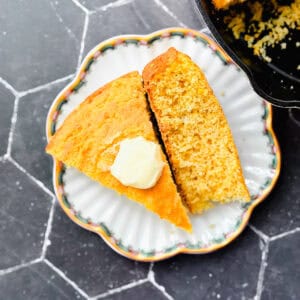
Skillet Cornbread with Creamed Corn
Recommended Equipment
Ingredients
- 1 cup (130 g) cornmeal
- 1 cup (120 g) all-purpose flour
- ¼ cup (50 g) granulated sugar
- 1 tablespoon baking powder
- ¼ teaspoon baking soda
- 1 teaspoon fine salt
- ½ cup (115 g) buttermilk room temperature
- 2 large eggs room temperature
- 1 cup (230 g) creamed corn
- 4 tablespoons (56 g) bacon fat melted - or unsalted butter
- 2 tablespoons (28 g) unsalted butter for the skillet
- Additional butter for brushing over the warm cornbread, optional
Instructions
- Preheat the oven to 425°F. Place a 10-inch cast iron skillet on the middle rack of the oven while it preheats.
- In a large mixing bowl, whisk together the cornmeal, all-purpose flour, baking powder, baking soda, and salt.
- In a large glass measuring cup or medium bowl, whisk together the buttermilk, eggs, sugar, creamed corn, and melted bacon fat or butter until well combined.
- Pour the wet ingredients into the dry ingredients and stir with a silicone spatula just until combined. Do not overmix. A few small lumps are fine.
- Carefully remove the hot skillet from the oven. Add the 2 tablespoons of butter and swirl the skillet to coat the bottom and sides as the butter melts.
- Immediately pour the cornbread batter into the hot skillet. The edges should sizzle as soon as the batter hits the pan. Some of the melted butter may pool around the edges or on top of the batter. That's exactly what you want.
- Bake for 25 to 30 minutes, or until the top is golden brown and a toothpick or thin knife inserted into the center comes out clean or with just a few moist crumbs.
- Remove the skillet from the oven. My Grandma always rubbed a little butter over the top while the cornbread was still hot, and I highly recommend following her lead.
- Resist your baser instincts and let the cornbread cool in the skillet for 5 to 10 minutes before slicing and serving.
Save this recipe
We'll email it to you.Notes
- Creamed corn: Use canned creamed corn, sometimes labeled cream-style corn. It adds moisture, sweetness, and more corn flavor without making the cornbread overly dense.
- Bacon fat or butter: Bacon fat gives the cornbread a slightly smoky, savory flavor. Melted butter works just as well if you do not have bacon fat or prefer not to use it.
- Buttermilk substitute: If you do not have buttermilk, you can substitute an equal amount of plain yogurt. If using a very thick Greek yogurt, thin it with a tablespoon or two of milk until it has approximately the consistency of buttermilk.
- Cast iron skillet: Preheating the cast iron skillet is what gives the cornbread that deeply golden, crisp bottom and crunchy edges. Do not skip this step if you want the full skillet cornbread experience.
- Other baking pans: You can bake the cornbread in a square metal baking pan or cake pan, although the crust will not be quite as crisp as it is in cast iron.
- For thinner cornbread: Bake the batter in a 9 x 13-inch metal baking pan or quarter sheet pan. Because the batter will be shallower, begin checking for doneness around 18 to 20 minutes.
- Storage: Store leftover cornbread tightly wrapped or in an airtight container at room temperature for up to 2 days or refrigerate for up to 5 days.
- Reheating: Warm individual slices briefly in the microwave, or reheat larger portions in a 325°F oven until warmed through. For crisp edges, reheat slices in a buttered skillet over medium-low heat.
Excellent recipe. The bacon grease takes it over the top. Much appreciation for sharing! I’ll never make cornbread any other way.
I’m so glad you like it! My Grandma always taught me to save bacon grease!