

The Best Baking Tools for making biscuits is something I could talk about all day. I have tested more biscuit recipes, more techniques, and more equipment than I could ever count. I grew up eating my Grandma Olga Mae's biscuits, spent years chasing that same result in my own kitchen, and along the way I figured out what actually matters and what you can probably skip.
Save this recipe for later
Enter your email and I'll send this recipe straight to your inbox.
My grandmother didn't use a lot of fancy tools to make biscuits. She had her hands, a bowl, a wooden spoon, and a washed-out green bean can she used to cut her biscuits. That was it. And her biscuits were the best I have ever eaten in my life.
I can still make biscuits in just about any situation, I call it "make it work kitchen" - and they come out just fine. So before we go any further, I want you to know that most of what follows is not strictly required. You can make great biscuits with almost nothing, just like Olga Mae.
Fast forward to today, though, and these are the tools I actually reach for. The bare minimum I always have on hand, plus a few extras that make the whole process easier and more enjoyable. If you're building out your biscuit kit for the first time, start here.
Jump to:
- Why Your Tools Actually Matter for Biscuits
- My Favorite Biscuit Making Tools
- Why Your Cookie Sheet Matters More Than You Think
- Skip It: Tools You Don't Actually Need
- My Favorite Flours
- Cynthia's Recipe Review
- Cynthia's Tips for Getting the Most Out of Your Tools
- Recipe FAQs
- My Favorite Biscuit Recipes
- 💬 Comments
Why Your Tools Actually Matter for Biscuits
Biscuits are one of those recipes where small things have a big impact. The temperature of your butter, how much you handle the dough, whether your cutter is sharp - all of it shows up in the final result. Having the right tools on hand means fewer variables to worry about, and more brain space for the part that actually matters: making something delicious.
Let me walk you through exactly what I use and why I reach for them every time.
My Favorite Biscuit Making Tools
The Bare Essentials
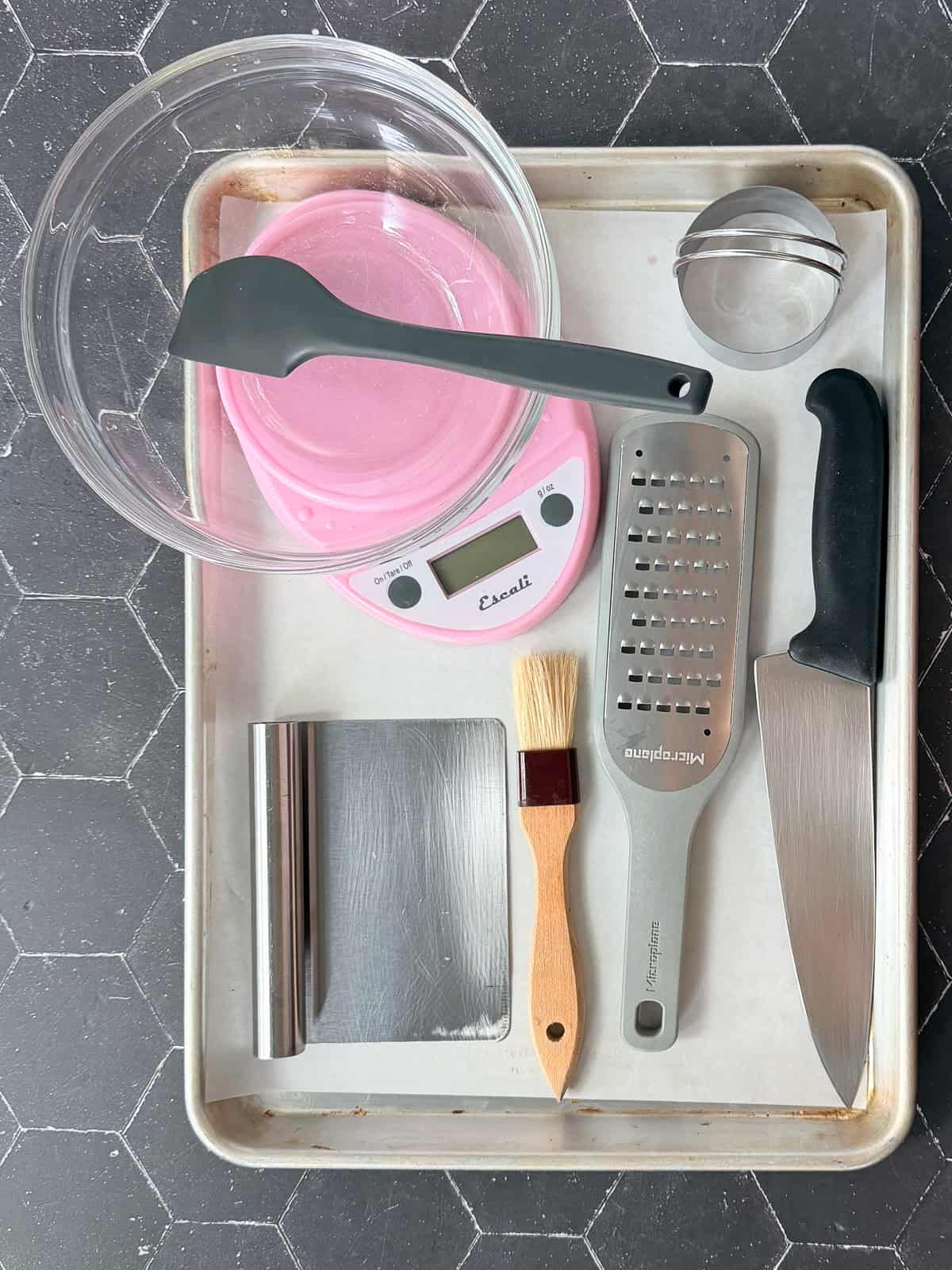
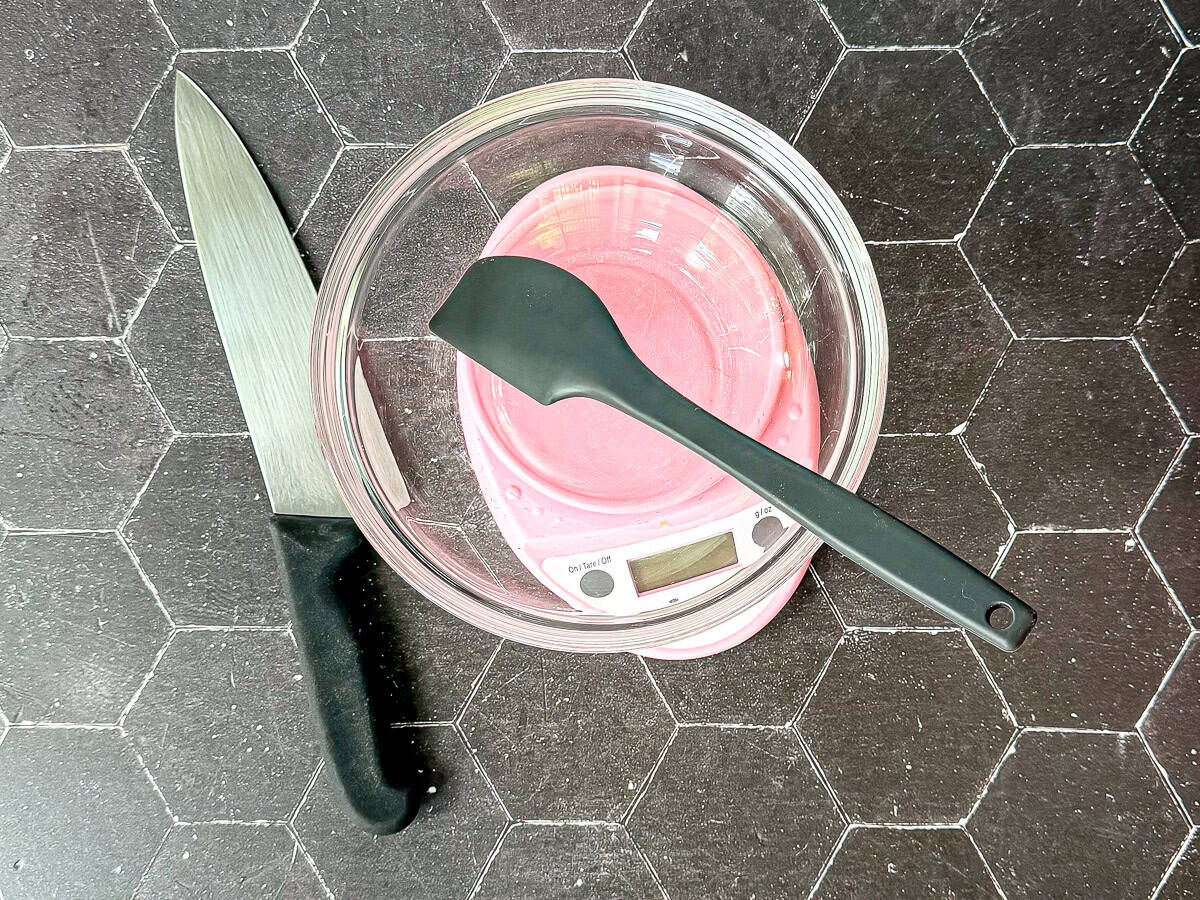
- Kitchen scale - If there is one tool that will improve your baking across the board, it is an inexpensive digital kitchen scale. Measuring flour by volume is inconsistent - one person's cup can weigh significantly more than another's depending on how they scoop. Cups lie. Scales don't. The best recipe developers include gram measurements for a reason, and following those weights gives you consistent results every time.
- Mixing Bowls - My go-to is the Anchor Hocking glass nested mixing bowls set. My middle daughter gave them to me years ago and they are still going strong. Glass bowls are easy to clean, don't hold onto odors or stains, and stay cool, which matters when you're mixing biscuit dough and trying to keep everything cold. The nested set gives you a size for everything - I use the biggest bowl for mixing, the medium for small batch recipes, and the smaller ones for everything else. Sturdy, timeless, and genuinely useful.
- Silicone Spatula - A large silicone spatula with a sharp edge is one of those tools that quietly does a lot of work. The sturdy body is firm enough to move through thick biscuit dough without folding under pressure and the sharp edge scrapes the bowl clean. Wooden spoons also work 😀
- Biscuit Cutters - Sharp edges are everything here. When you press a biscuit cutter into your dough, a clean, sharp edge cuts straight through the layers without dragging or sealing them together. Sealed layers won't rise the way you want them to. A drinking glass, which so many of us have grabbed in a pinch (no judgment, I've done it), has a rounded or uneven rim that can press and compress those layers instead of slicing through them cleanly. That's often why biscuits won't rise tall.
- Chef Knife - If you don't have a cutter at all, use a sharp chef knife and cut your dough into squares. No sealed edges, no problem. The one I reach for most often isn't my fanciest, but it genuinely outperforms knives I paid a lot more for. It cuts cleanly, holds its edge longer than most, and sharpens back up easily with an inexpensive knife sharpener.
Also Pretty Darn Useful
- Cheese Grater - A box grater for butter might be a little bulky, so I often reach for a small handheld cheese grater. Frozen or very cold butter run over a grater gives you thin, even little shreds of butter that distribute through the flour quickly and evenly. Less handling, better layers. You can absolutely cut butter into cubes with your bench scraper if that's more your style - both methods work - but grated butter is faster to work into the dough and keeps things cold.
- Bench Scraper - An all-metal bench scraper is one of the most underrated tools in a biscuit baker's kit. I look for one with inch measurements stamped on the blade so I can check dough thickness without hunting for a ruler. I also use it to cut dough into squares, lift and fold during lamination, and clean my work surface in one swipe. One tool, about a dozen jobs.
- Pastry Brush - A natural bristle pastry brush applies egg wash more evenly than a silicone brush, a barbecue brush, or folded paper towel ever will, and that even coat is what gives your biscuits that deep, consistent golden crust. It costs very little and the difference shows up every single time your biscuits come out of the oven.
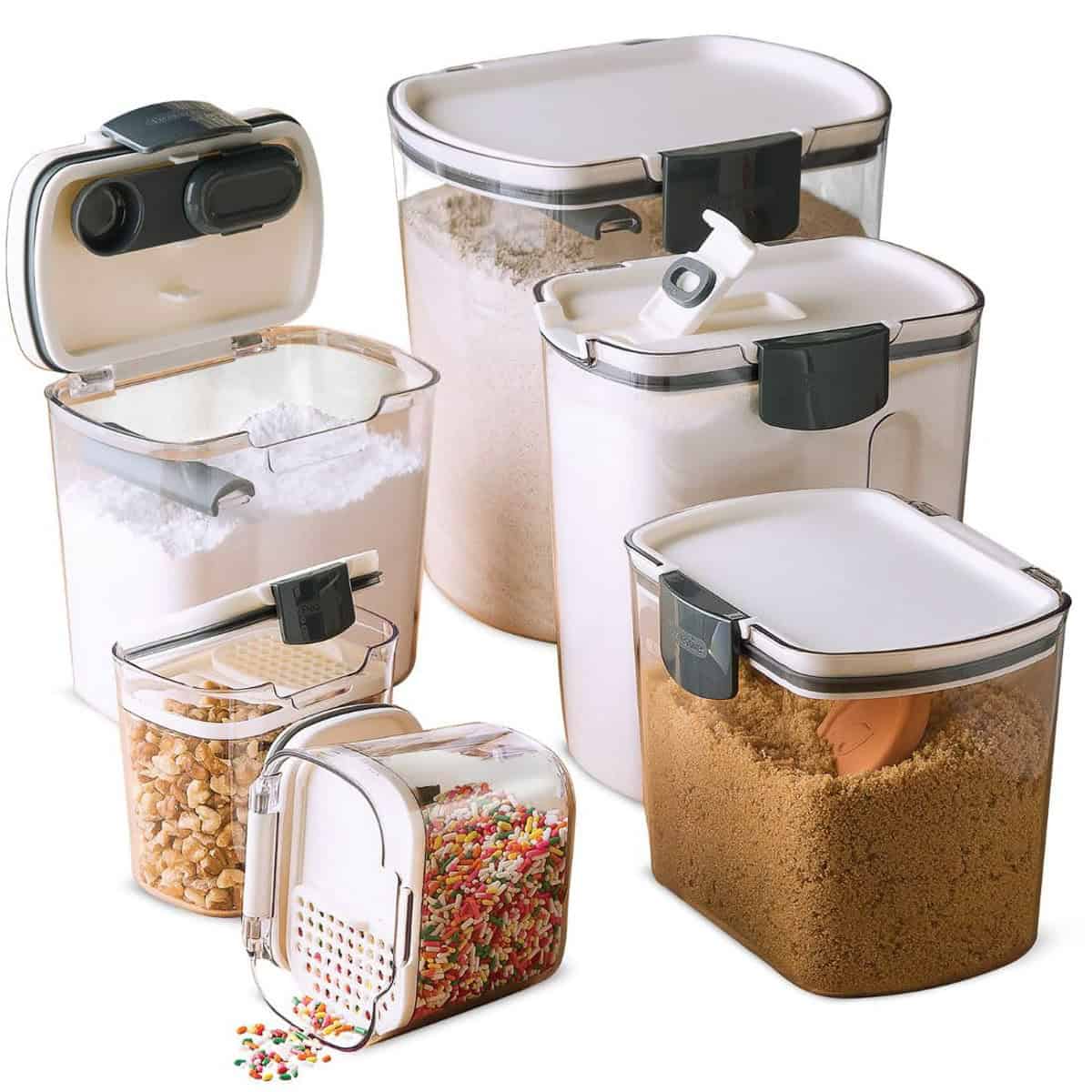
- Airtight containers - if you're going to be making biscuits a lot, which I know you are, you want to have high-quality airtight containers to keep all of your baking ingredients. I use the pro keeper containers because a 5 pound bag of flour will fit in a large one, a 4 pound bag of sugar will fit in the next one, and then the others I use for powdered sugar, brown sugar, baking powder, and baking soda. 10/10 highly recommend!
Why Your Cookie Sheet Matters More Than You Think
A good sheet pan is worth buying once and buying right. My favorites are Nordic Ware stainless steel large sheet pans, known as half sheet pans, and I have had some of mine for more than 20 years. They have never buckled, never warped, never let me down. Cheap pans twist under high heat, and most biscuits bake at 450°F - that is not the moment to find out your pan has a warp in it.
I use a baking sheet for everything. Roasting vegetables, making sheet cakes, roasting a whole chicken, sheet pan pancakes, sheet pan eggs, sheet pan dinners - they do it all. I also keep a small sheet pan on hand for my small batch buttermilk biscuits and other smaller baking projects. If you are going to invest in anything on this list, start here.
Skip It: Tools You Don't Actually Need
The internet will tell you that you need a whole lot of "essentials" before you can even think about making biscuits. I am here to tell you that is not true. Here's what you can probably skip:
- Food processor - A lot of biscuit recipes tell you to use a food processor for the entire biscuit making process. Even I have a food processor biscuit recipe because sometimes people with mobility issues need an alternative. The problem is it's very easy to over-process the dough in seconds and end up with tough biscuits. Unless you really need it, you can skip it.
- Pastry cutter - A pastry cutter is not terrible, but not necessary either. Grating cold butter straight into the flour or cutting it into cubes with your bench scraper gets you to the same place without an extra tool to wash. Plus that's one of those tools that never fits in your drawer quite right and then when you try to open the drawer… guess what's sticking up? Skip it.
- Rolling pin - I will sometimes use rolling pin if I want to get my biscuit layers very even, but honestly if you have hands you can pat out your biscuit dough. Skip it.
- Stand mixer - For biscuits specifically, a stand mixer is overkill and can easily overwork the dough. Biscuit dough should be mixed as little as possible. Your hands and a sturdy spatula are the best tools. Skip it.
- Silicone baking mat - Parchment paper does the same job of a silicone baking mat for a fraction of the cost. Skip it.
- Parchment paper - Speaking of parchment paper, I really don't wanna say skip it, but if you need to save money somewhere, you can save it on parchment paper. You can use a well seasoned cast-iron pan, you can grease your cookie sheet, or lay down some aluminum foil. Skip it - I guess.
- Specialty biscuit pan - A regular sheet pan works perfectly. You don't need a pan designed specifically for biscuits. Skip it.
- Sifter - Most modern flour comes pre-sifted. Whisking your dry ingredients together in the bowl does everything a sifter does without the extra equipment. If you really want to sift, just use a wire mesh strainer. Skip it.
My Favorite Flours
Most biscuit recipes just say "all-purpose flour" and leave it at that, and I want you to use the best flour that you can afford, but not all all-purpose flour is the same. Protein content is what we're really talking about here, and the difference can show up clearly in your biscuits.
I'm providing links to the flours, but they can be found much cheaper in your local market. I just want you to see what I prefer to use, when I'm not in a "make it work kitchen".
King Arthur All-Purpose Flour - King Arthur Flour sits right around 11-12% protein. That's a strong, reliable middle ground for baking. Your biscuits will have enough structural integrity to rise tall and hold their shape without slumping in the oven, but they'll still be tender inside.
I use King Arthur in almost all of my biscuit recipes and recommend it without hesitation. It's widely available and consistently behaves the way you expect it to. If you're working through my collection of biscuit recipes, King Arthur is the flour that will give you reliable results across all of them.
White Lily Flour - White Lily Flour is something else entirely, and I say that from deep within my Southern soul. It's a soft winter wheat flour with a protein content around 9%, and that lower protein means less gluten development when the flour hits liquid. Less gluten means a more tender, delicate crumb.
White Lily is also finely milled to a consistency that almost feels like powdered sugar, so it hydrates fast and rises beautifully. The result is a biscuit that is incredibly light, fluffy, and pillowy in a way that is honestly hard to describe if you haven't tasted it.
This is the flour my grandmother used. I grew up hearing about it and now I understand exactly why she never switched. It's the gold standard for Southern biscuits.
The catch? I live in the northern United States and White Lily is not easy to come by up here. Ordering online means paying more than I'd like. But if you live in the South, it's on every grocery store shelf and I genuinely envy you for that. If you ever take a road trip South, pick up a few bags. And if you're ever standing in a Southern grocery store wondering whether to buy it, the answer is yes. Do it. Don't even think about it.
Cynthia's Recipe Review
Getting my biscuit setup right changed how I feel about baking them. Less stress, better results, and honestly more fun. A good bowl, a sharp cutter, and the right flour - that's really all it takes. Everything else is gravy. Sausage gravy, ideally. ❤️

Cynthia's Tips for Getting the Most Out of Your Tools
- Keep your bench scraper dry - Moisture can cause rust on metal scrapers over time. Dry it well after washing and it will last for years.
- Chill your tools - If your kitchen runs warm, pop your mixing bowl and bench scraper in the fridge for a few minutes before you start. Cold tools help keep your butter cold longer.
- Sharpen your knives - A sharp knife is also a safer knife, and that's not just a saying. A dull knife requires more pressure to cut through anything, and more pressure means less control. Less control is where accidents happen. A sharp blade does what you ask it to do, goes where you point it, and doesn't slip or skid across the surface you're cutting. If you're only going to do one thing to upgrade your kitchen this year, sharpen your knives. Your fingers will thank you.
- Check expiration dates - Old flour or baking powder can and will affect rise and texture. If yours has been open for more than a few months, it might be time for a refresh.
- Grate your butter frozen - Popping your butter in the freezer for 15 minutes before grating, and flouring the surface of your grater, will help the butter shred cleanly without sticking.
- Use the right cutter size for your dough thickness - If your dough is three-quarter inch thick, use at least a 3-inch cutter. Too small a cutter on thick dough can cause it to fall over while baking from the sheer audacity of having so many layers.

Recipe FAQs
No one is going to stop you from using a glass, but a sharp-edged biscuit or cookie cutter gives you a much cleaner cut through the layers of dough. That clean cut is what lets your biscuits rise tall and straight. A rounded glass rim can compress and seal those layers instead of slicing through them. If you don't have access to a biscuit cutter, I'll bet you still have a knife that will give you a nice sharp edge to your biscuits.
Yes. A food processor works beautifully, and is and especially useful tool if you have any mobility issues. The goal is just to get cold butter into small, even pieces without warming it with your hands. 5 or 6 one second pulses should get you there.
Not necessarily. My most-used knife is a mid-range Victorinox that I prefer over pricier options. What matters is that it's sharp. A well-maintained affordable knife beats a neglected expensive one every time.
You can get by without one, but once you use it, you'll wonder how you managed without it. It makes the cut-and-stack lamination method much easier, keeps your hands off the warm dough, and cleans up your work surface instantly. I use mine in almost every biscuit recipe I make, including my cast iron biscuits.

Did you find this article helpful?
Please consider leaving a comment with a ⭐️ rating below and tell me all about it! It helps me to continue to improve my content and lets others know what you think!
I appreciate you so much!
-Cynthia

Comments
No Comments