


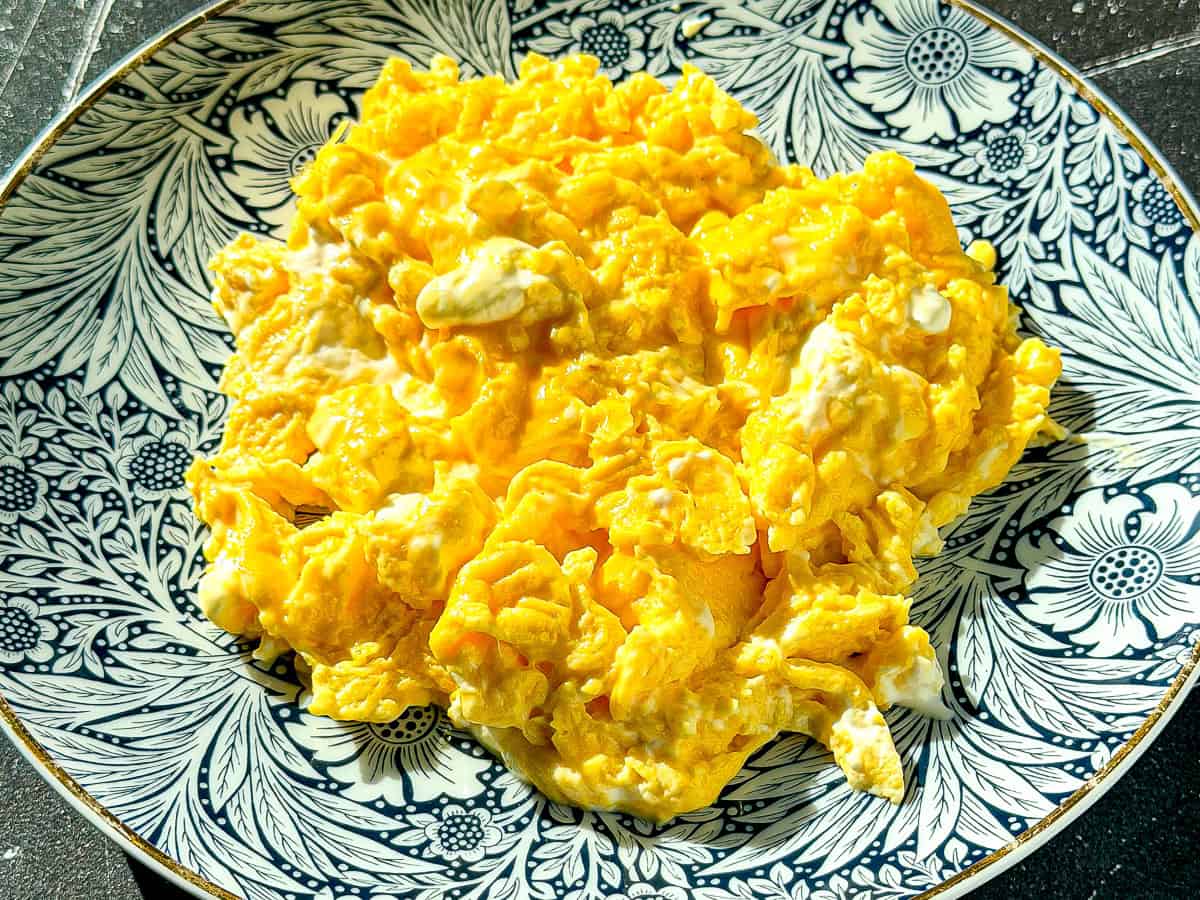
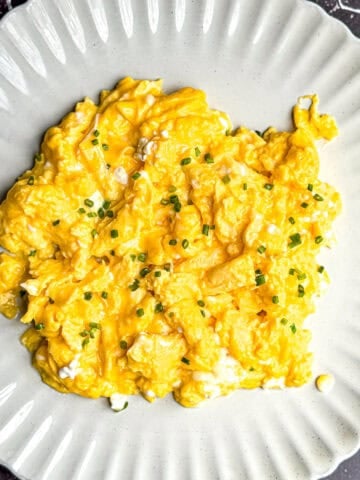
These Mascarpone Scrambled Eggs are soft, creamy, and ready in 10 minutes with just a few simple ingredients and one nonstick pan. Mascarpone melts into the eggs for rich, glossy curds, while gentle heat keeps them tender instead of rubbery. It is an easy breakfast or brunch recipe that feels a little fancy, but still comes together faster than toast and coffee.
Save this recipe for later
Enter your email and I'll send this recipe straight to your inbox.
There is something so appealing about the perfect Creamy Scrambled Eggs that actually makes my mouth water. Adding in dollops of mascarpone cheese and heavy cream ensures that your eggs will (almost) never be dry. You will crave them. You will think about eggs probably more than anyone should be thinking about eggs. They're that good!
Confession: I never used to like scrambled eggs. They felt like rubber in my mouth, the flavor was off-putting, and they made a kind of squeaking noise when I chewed them. Oh wait, that's because they were always overcooked! My parents, short order cooks, me - we were overcooking our eggs all along! Follow along as I show you how to make the creamiest scrambled eggs with the most flavor - and no squeak, unless you have a mouse or a loose floorboard.
Jump to:
Ingredients
So few ingredients. No heavy cream? Leave it out. No butter? Use olive oil. No eggs? Don't be silly, go to the store and come back. We'll wait.
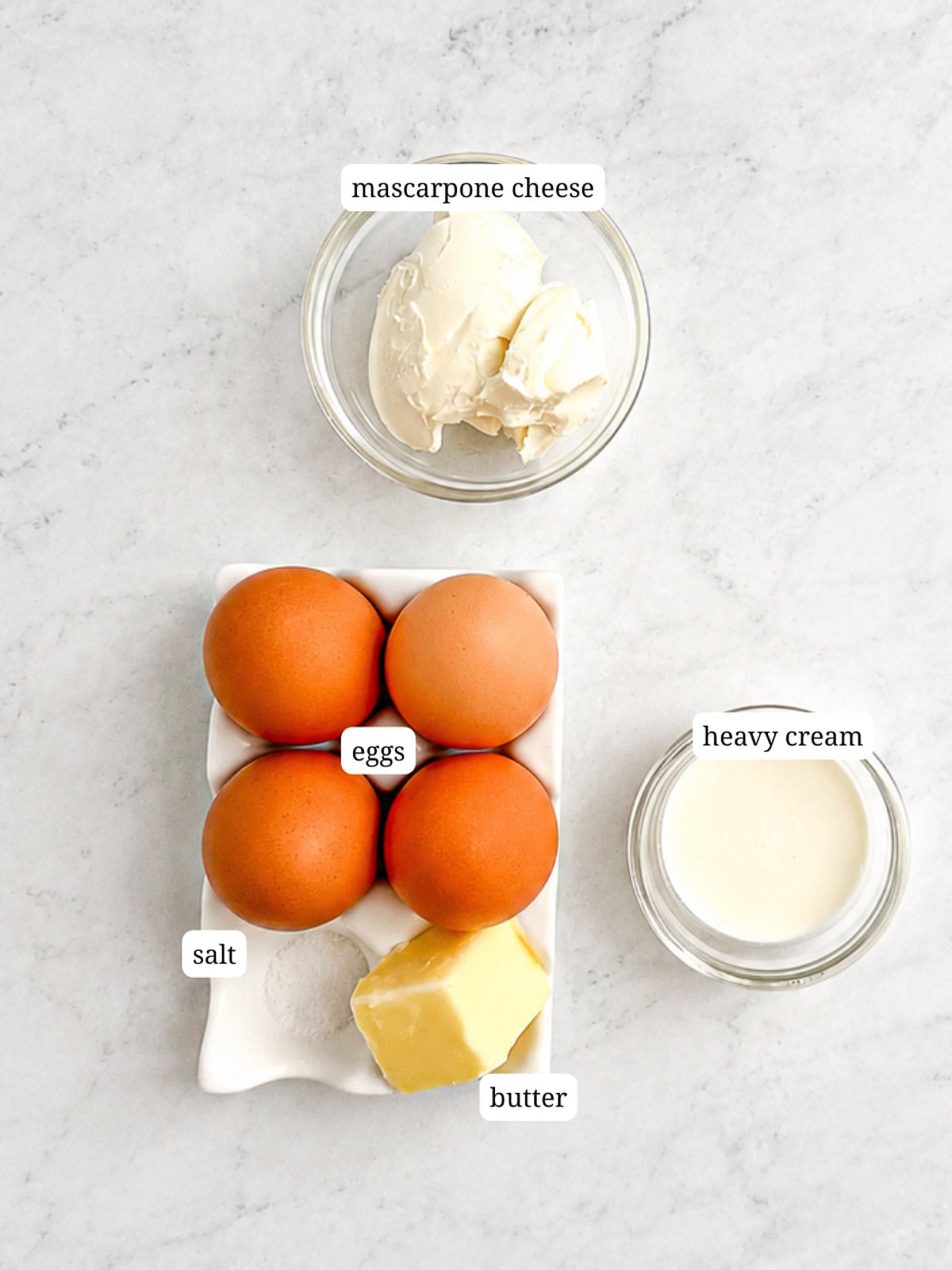
- Mascarpone - In place of the mascarpone, you can use cream cheese or creme fraiche.
- Heavy cream - If you would like, you can leave this out, or substitute with coconut cream (not cream of coconut, which is used in pina coladas). If you choose this, I would look for refined coconut cream, as this has a neutral flavor.
- Eggs - Welp... this is an egg dish, and I've never had luck egg substitutes, but if you have and want to try it, please let me know how it goes.
- Butter - I use unsalted butter in all of my sweet and savory recipes because there is no standard amount of sodium between different brands. If using salted butter, use half of the additional salt. You can also use your preferred oil in it's place.
- Salt - Speaking of salt, kosher salt, specifically Diamond crystal kosher salt for me, is less salty than the common table salt. Add salt at the beginning of cooking to prevent the egg proteins from bonding too tightly, leading to watery eggs.
See recipe card below for a full list of ingredients and measurements.
What mascarpone does in scrambled eggs
Mascarpone scrambled eggs are different from regular creamy scrambled eggs because mascarpone is rich, buttery, and soft without the tang of cream cheese or the slightly grainy texture of store-bought ricotta. It melts into the eggs as they cook, leaving behind soft curds that taste like you ordered them from a fancy brunch place with linen napkins.
In this recipe, half of the mascarpone is whisked into the eggs before cooking, and the rest is folded in off the heat. That gives you creamy eggs from the inside out, with little pockets of mascarpone finishing the eggs gently instead of turning them dry or rubbery.
Using mascarpone cheese gives your scrambled eggs the luxurious feeling that you would expect from a fine dining restaurant, but without the need to babysit your eggs for a long period of time.
Mascarpone vs ricotta vs cream cheese in scrambled eggs
Mascarpone makes scrambled eggs rich, silky, and buttery. It is the best choice when you want soft, restaurant-style eggs that feel a little fancy but still take less than 10 minutes.
Ricotta scrambled eggs are lighter and a little fluffier, with soft curds and a more delicate texture. If you want that version, try my Ricotta Scrambled Eggs, prefer preferably with my homemade ricotta cheese to avoid any graininess.
Cream cheese scrambled eggs are tangier and a little more structured, which makes them great for people who want creamy eggs that are a little more budget-conscious. If that sounds like your vibe, try my Scrambled Eggs with Cream Cheese.
Don't feel like scrambling? Try my Simple Hard Boiled Eggs! My recipe has 2 different ways to cook your eggs and tips for easy peeling too! Check it out!
Equipment
Nonstick pan: When cooking eggs, a nonstick pan is your best choice. Eggs are inherently sticky and their stickiness makes them difficult to move, flip, or clean them from your cast iron or stainless steel. Yes cast iron does have some nonstick properties at high heat, as does stainless steel, but since we will be cooking these eggs on a lower heat, why take the risk. Investing in a good nonstick pan and treating it with care will leave you with less frustration and more delicious eggs.
Chopsticks: Some astute readers, and those who watch me make breakfast most mornings on Instagram, will notice that do most of my whisking with chopsticks. First of all, that's what I grew up seeing. My mother was Korean and I don't recall if I ever saw a whisk in our house when I was growing up.
Using chopsticks in the kitchen is more than cultural and many professional chefs are turning to them in their cooking They make it easier to maneuver cooking meats, flipping fried foods, and even for plating.
They also incorporate more air into your ingredients when whisking, making your muffins and cakes and even eggs more fluffy. They allow for more precision, less splatter, easier clean up, and bamboo or wooden ones won't damage cookware. Try it for yourself. Just hold them like you would for eating and whisk your ingredients with a circular motion.
Cynthia's Recipe Review
These are the eggs I make when I want breakfast to feel a little extra without a whole production. The mascarpone melts into the eggs and suddenly 10-minute scrambled eggs feel like brunch at a very expensive hotel.

Quick Recipe Video
Instructions
Making beautifully creamy scrambled eggs is less about ingredients than it is about technique. Keep your heat lower than you think you should and you'll be fine. Keep the eggs moving and pull them off the heat before they are completely finished. Let's do this together:
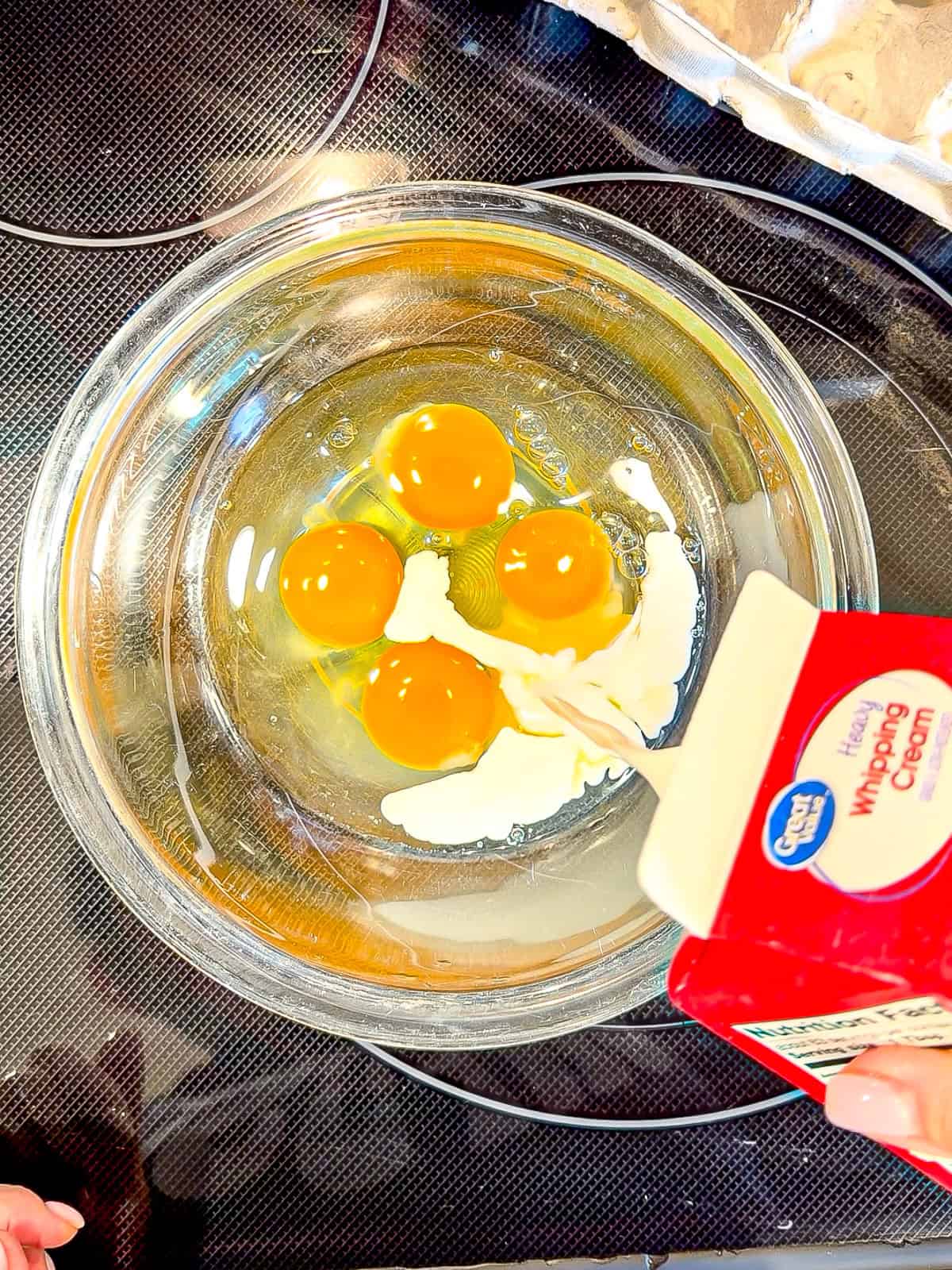
Step 1: Crack your eggs into a large bowl and add all of the heavy cream and your salt.
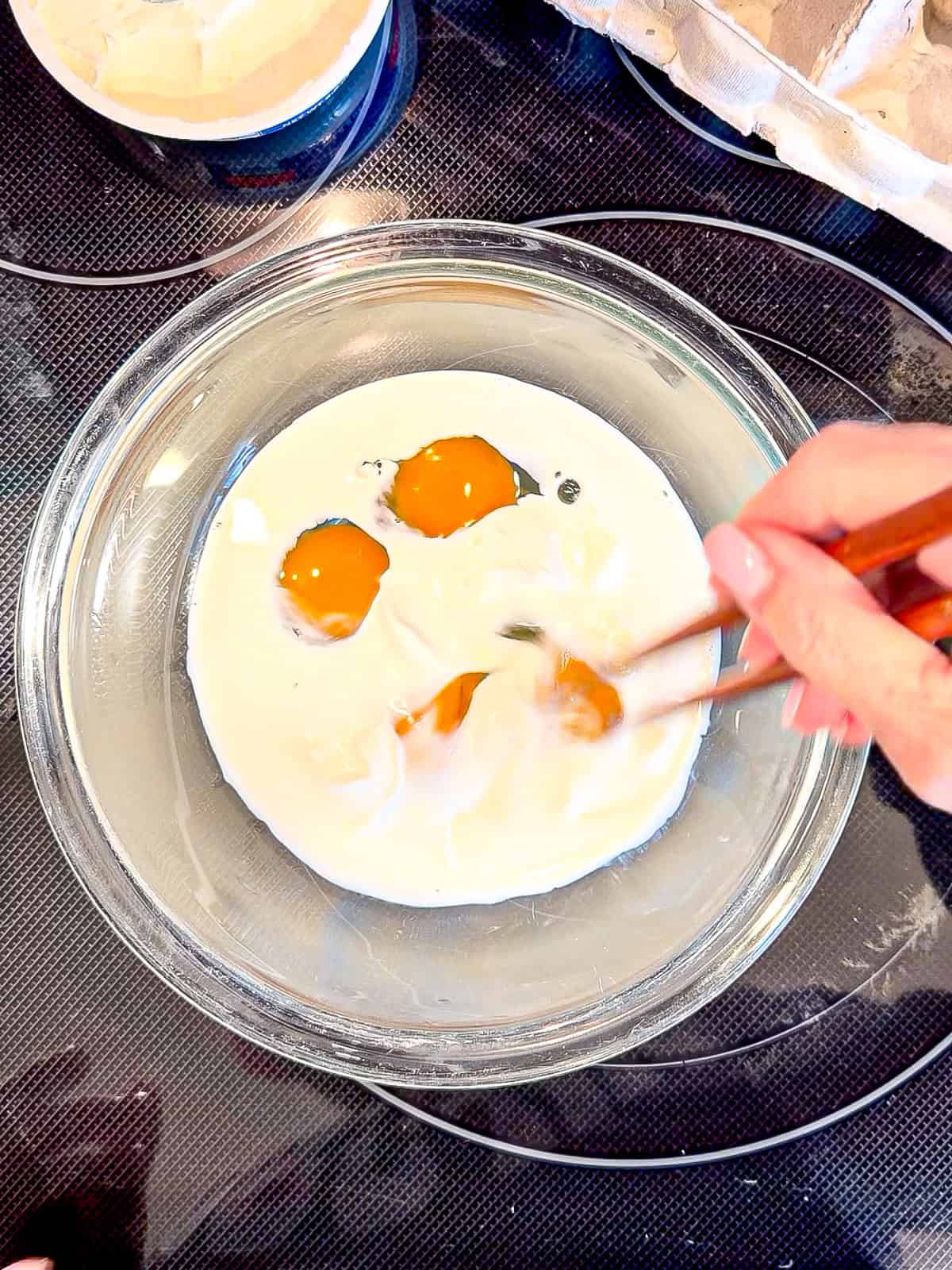
Step 2: Add half of the mascarpone cheese and use a large whisk, or chopsticks, to whisk until there is no visible difference between the whites and the yolks. There will be large pieces of mascarpone still floating around, and that's just what we want.
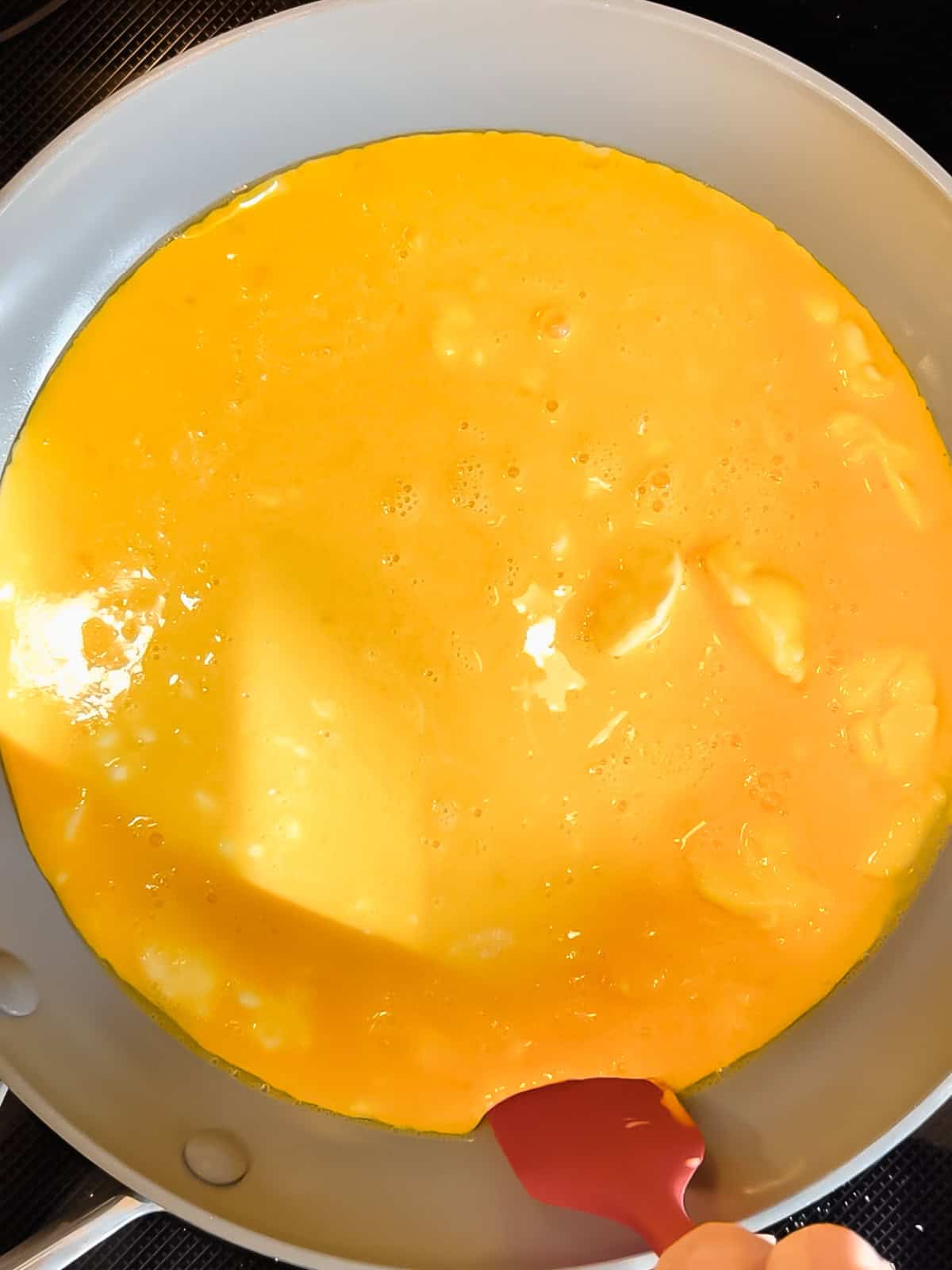
Step 3: Heat a nonstick pan to medium-low heat and add butter to melt. Add the egg mixture and allow to sit, undisturbed, for about 30 seconds.
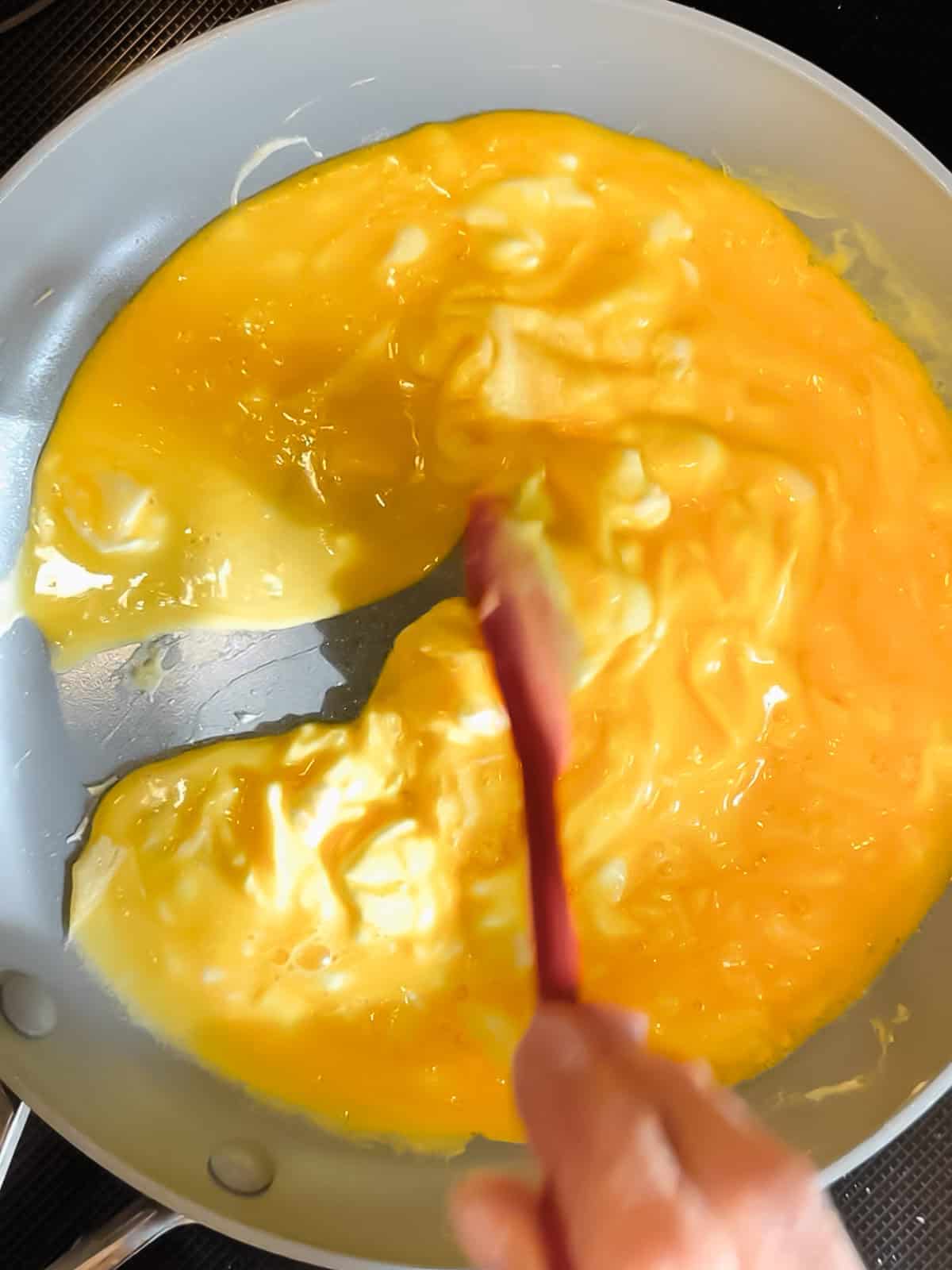
Step 4: Run a spatula along the bottom and sides of the pan, scraping the cooking eggs off to one side and allowing uncooked eggs to take their place against the bottom.
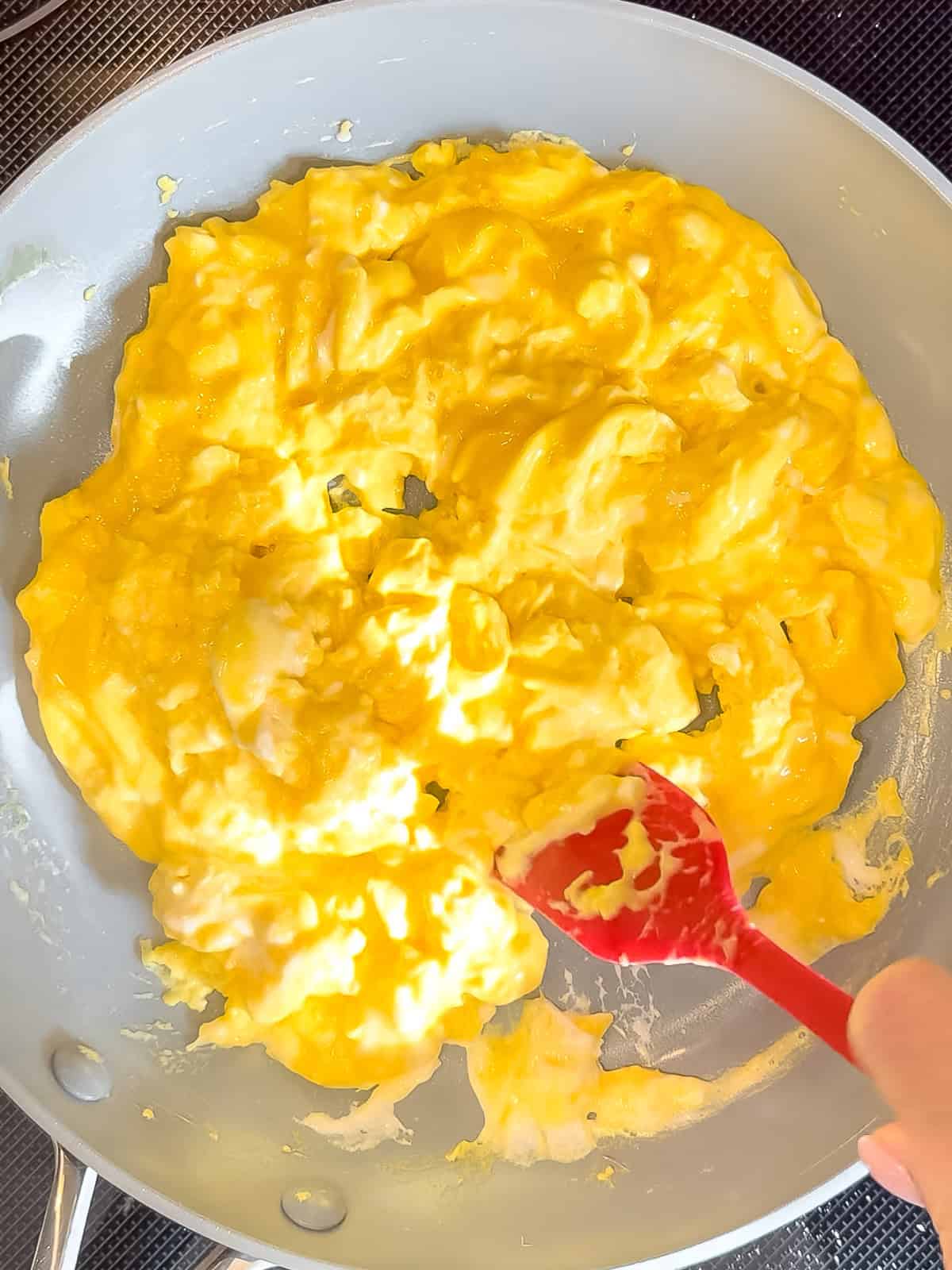
Step 5: Continue the eggs until they are about 90% done and they are still glistening with moisture. This could take anywhere from 5 to 8 minutes, depending on your stove.
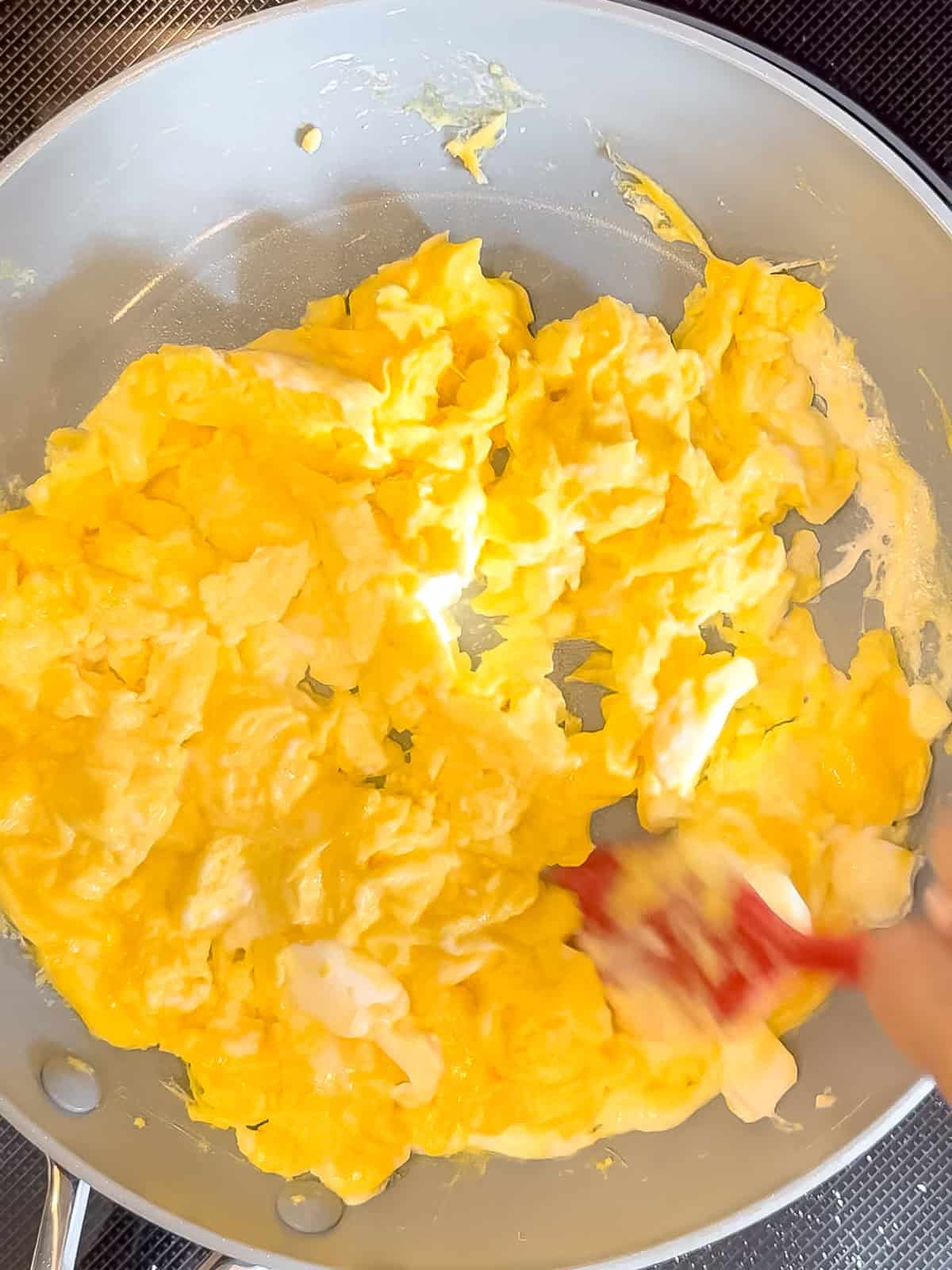
Step 6: Take your pan off the heat and dollop the remaining mascarpone on top of the mostly cooked eggs. Fold in and allow to melt.
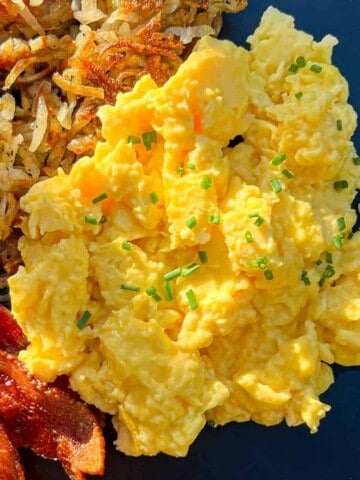
Step 7: Transfer directly to serving plates to stop cooking. Serve, garnished with chopped fresh herbs, perhaps alongside some crispy bacon and some extra fluffy biscuits.
Better with bacon: Take your eggs to the next level by crumbling up some Crispy Prosciutto and sprinkling it all over the top. so good! (okay, technically it's Italian ham, but it eats like bacon and I love it like bacon 🥰)
Expert tip
The most common mistake that people make when making creamy scrambled eggs is cooking them too fast over too high heat. Doing that will result in tight curds that release their moisture and become watery as they sit on your plate. Slow and steady definitely wins the race for creamy scrambled eggs.
The second most common mistake is simply overcooking your eggs. Contrary to what you may think to be true, soft scrambled eggs that are still glistening with moisture, are not undercooked, nor are they unsafe to eat. We eat over easy and sunnyside up eggs all the time, and we live to tell the tale. Soft scrambled eggs are fine. Besides, with pasteurization, any risks associated with eating eggs are practically nil.
If you are still unsure, the target temperature that will eliminate most bacteria in eggs is 145°F. If you want to check the temp of your creamy scrambled eggs, go right ahead, but I might just be eating your serving while you're looking for your thermometer. No promises!
Serving Suggestion
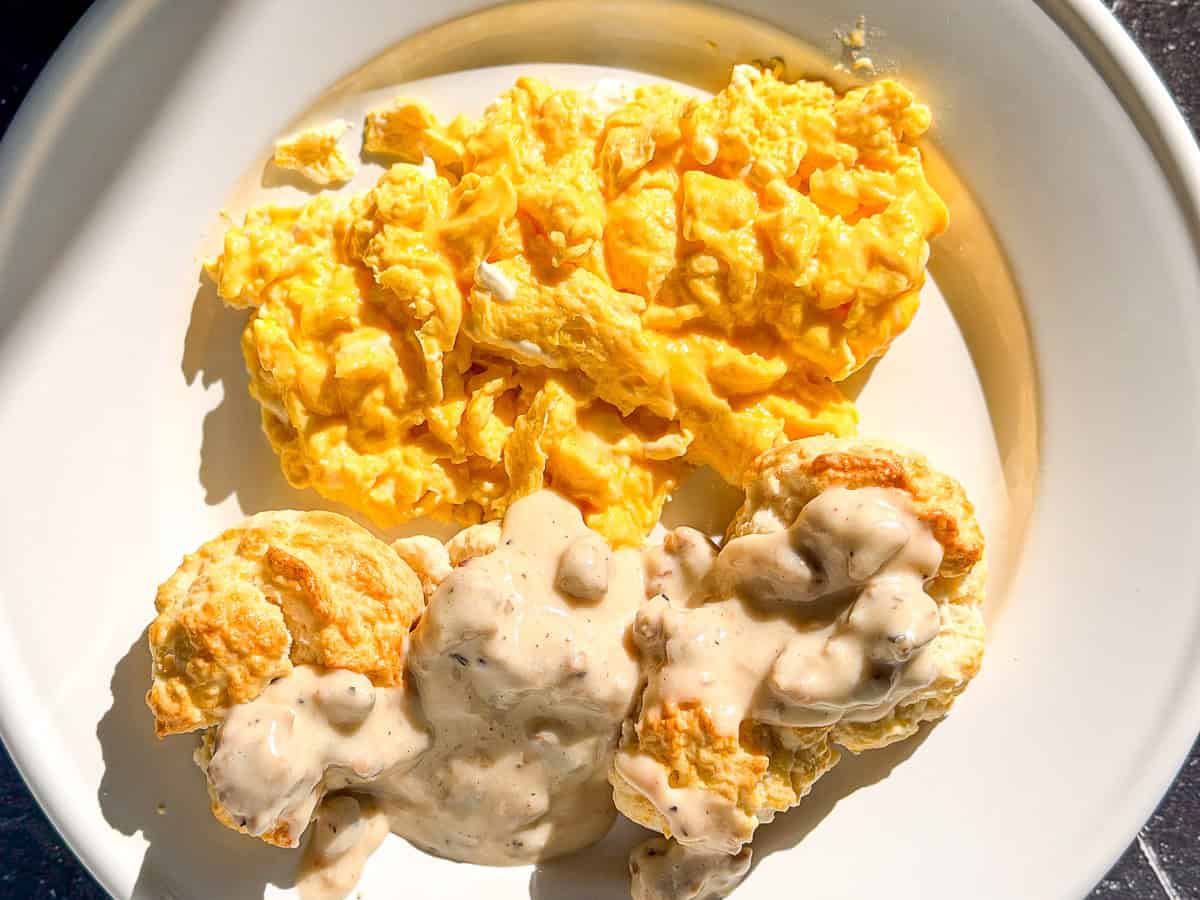
I'm a simple girl. A serving of creamy scrambled eggs alongside my biscuits and gravy will keep me fueled at least until lunchtime, or second breakfast.
Recipe FAQs
Yes. You can leave out the heavy cream and still have creamy scrambled eggs because the mascarpone does most of the heavy lifting. The eggs will be slightly less rich, but still soft and tender if you cook them over medium-low heat and remove them from the pan while they are still glossy.
Scrambled eggs can turn watery when they are not salted first, cooked too quickly, cooked over heat that is too high, or left sitting in a hot pan after they are finished. High heat can make the egg proteins tighten and squeeze out moisture, so keep the heat at medium-low, stir gently, and transfer the eggs to plates as soon as they are done.
To reheat your eggs microwave for about 30 seconds on 50% heat, stir and heat for another 30 seconds on 50%, to just warm them a bit, or reheat in your nonstick pan, being careful not to overcook them.
Did you try this recipe?
Please consider leaving a comment with a ⭐️ rating below and tell me all about it! It helps me to continue to improve my content and lets others know what you think!
I appreciate it so much!
-Cynthia
📖 Recipe
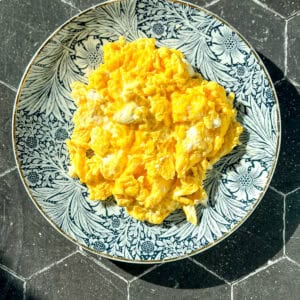
Creamy Scrambled Eggs with Mascarpone
Recommended Equipment
Ingredients
- 4 large eggs
- ¼ cup mascarpone cheese
- 2 tablespoons heavy cream
- 1 tablespoon unsalted butter
- ⅛ teaspoon kosher salt
Instructions
- Crack your eggs into a large bowl and add half of the mascarpone, the salt, and all of the heavy cream.
- Use a large whisk to mix the cheese into your eggs until there is no visible difference between the whites and the yolks. There will be large pieces of mascarpone still floating around, and that's just what we want.
- Heat a nonstick pan to medium-low heat and add butter to melt. Pour the eggs into the skillet and let sit for about 30 seconds, to give the bottom time to cook a little.
- Run a spatula along the bottom of the pan, scraping the cooking eggs off to the side and allowing uncooked egg to take their place against the bottom.
- Continue running your spatula along the bottom and sides of the pan to to form curds and to prevent any part of the eggs from overcooking.
- Cook the eggs until they are about 90% done and they are still glistening with moisture. This could take anywhere from 5 to 8 minutes, depending on your stove.
- Take your pan off the heat and dollop the remaining mascarpone on top of the mostly cooked eggs.
- Fold the eggs over the cheese and stir in. Transfer directly to serving plates. Garnish with fresh herbs if desired.
Comments
No Comments